
AI Automation
Choosing the Right AI Automation Partner for Your Business
Choosing an AI automation partner is one of the most important technology decisions a growing business can make. The right partner can connect systems, simplify workflows, improve response times, and help teams use AI with confidence. The wrong partner can leave the business with disconnected tools, unclear ownership, weak adoption, and expensive fixes later.
AI automation services should never be only about adding a chatbot or installing one tool. A strong partner studies how your business works, where manual work slows growth, which systems need to connect, and what outcomes must improve. Therefore, the best choice is usually the partner who understands operations as deeply as technology.

Why the Right AI Automation Partner Matters
AI projects touch more than software. They affect sales follow-ups, customer support, internal approvals, reporting, data quality, employee habits, and customer experience. Because of that, businesses need a partner who can design workflows that people will actually use.
A poor implementation may look impressive during a demo, yet fail in daily operations. For example, an AI assistant may draft replies without CRM context, a lead scoring system may ignore customer history, or a dashboard may show numbers that teams do not trust. These problems are rarely caused by AI alone. They usually come from weak planning, bad data, or missing integration.
The right partner helps prevent these issues early. They ask better questions, map the process before building, define approval steps, connect the right systems, and measure the results after launch. As a result, automation becomes a business improvement instead of another tool to manage.
What AI Automation Services Should Include
AI automation services should include discovery, workflow design, system integration, automation buildout, testing, training, reporting, and ongoing optimization. If a provider only talks about prompts or one AI tool, the solution may be too narrow for a real business environment.
Discovery is the first step. The partner should understand your current processes, team roles, customer journey, data sources, and bottlenecks. Then, they should recommend which workflows should be automated first and which ones need cleanup before automation begins.
Integration is also essential. AI becomes more useful when it can work with CRM, email, forms, calendars, support platforms, documents, billing systems, analytics, and dashboards. Without these connections, AI may produce output that sounds polished but lacks business context.
Signs of a Strong AI Automation Partner
A strong partner explains tradeoffs clearly. They do not promise that AI will fix every problem overnight. Instead, they identify which workflows are ready, which data needs improvement, and which steps require human review.
They also focus on measurable outcomes. Good goals include faster lead response, lower manual data entry, fewer missed follow-ups, better customer routing, cleaner reporting, shorter onboarding time, and improved retention. These outcomes make the project easier to evaluate.
Another sign is comfort with change management. Employees need training, managers need visibility, and leaders need a clear rollout plan. When the partner includes those pieces, adoption becomes easier.
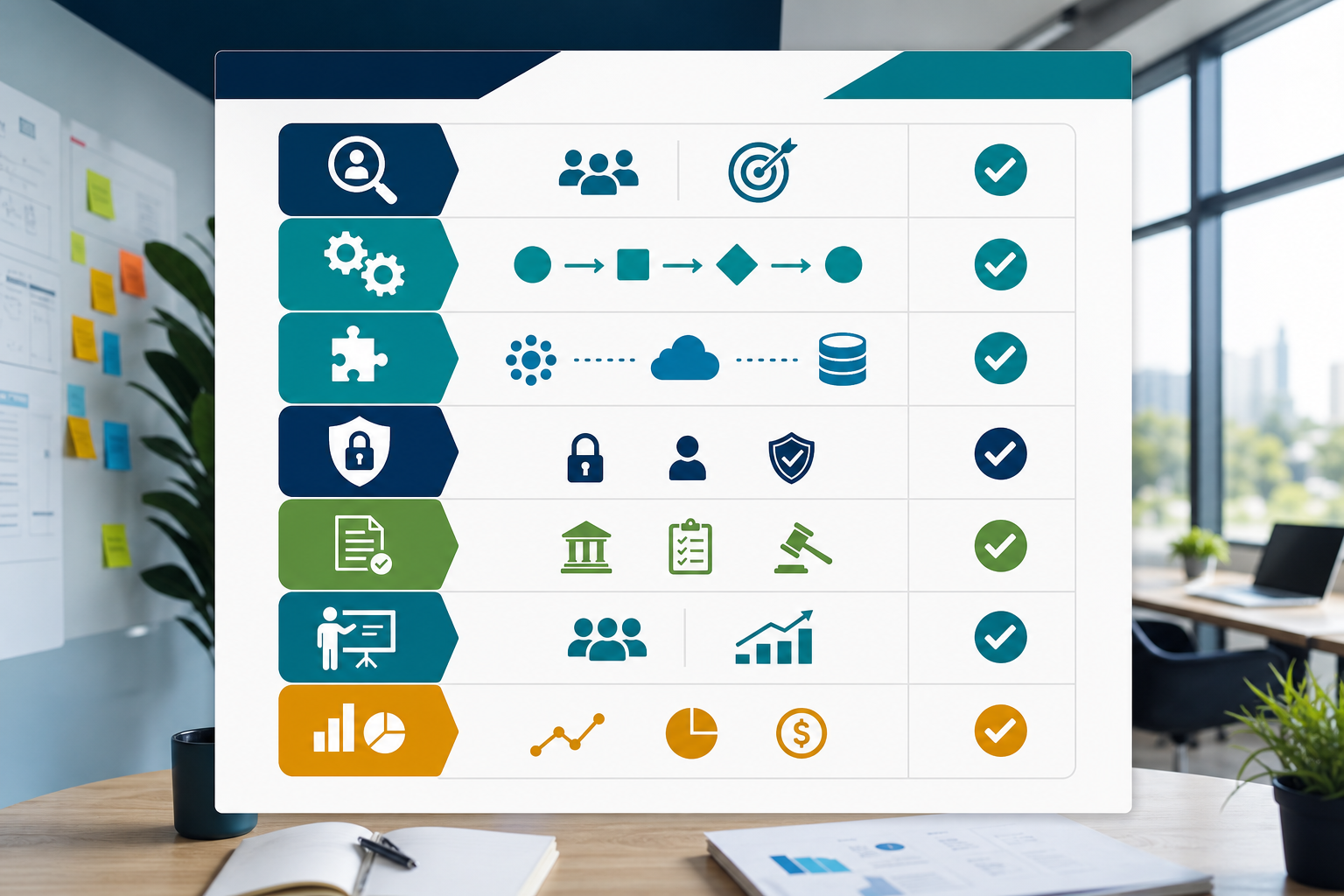
Wrong Vendor vs Right AI Automation Partner
Many vendors can install tools. Fewer partners can redesign a workflow, connect systems, train teams, and prove business value. The difference matters because growing companies need practical implementation, not just software access.
| Evaluation Area | Wrong Vendor | Right AI Automation Partner |
|---|---|---|
| Discovery | Starts with a tool demo and generic features. | Starts with business goals, workflow audits, data quality, and team needs. |
| Integration | Leaves AI disconnected from CRM, support, finance, or reporting. | Connects AI with the systems that hold real business context. |
| Security | Treats privacy, permissions, and approval rules as afterthoughts. | Defines access, governance, human review, and auditability from the beginning. |
| Training | Hands over the tool and expects teams to adapt. | Trains users on real workflows, limitations, exceptions, and feedback loops. |
| ROI | Measures success by tool setup or usage alone. | Measures time saved, errors reduced, revenue impact, and customer experience. |
The right AI automation partner should make your business more connected and easier to operate. If the project creates more dashboards, more manual checks, or more confusion, the implementation is not serving the business well.

Helpful Internal and External Resources
If you are comparing providers, start by reviewing the exact workflows you want to improve. IQBIRDS supports that process through AI automation services, AI integration services, and AI CRM development. For strategic planning before implementation, AI consulting services can help define priorities and project scope.
For external guidance, Microsoft explains why partner capabilities matter through its Microsoft partner resources. The NIST AI Risk Management Framework is useful for evaluating risk, governance, and responsible AI practices. McKinsey also discusses how companies can scale AI by combining strategy, talent, operating models, data, and risk management in its State of AI insights.
Step-by-Step Guide to Choose the Right Partner
Step 1: Define the Business Outcome
Start with the result you want, not the tool you think you need. You may want faster lead response, cleaner CRM data, shorter support resolution time, better onboarding, or less manual reporting. Clear outcomes make partner conversations more practical.
Step 2: Audit Your Current Workflows
Document the processes that slow your team down. Include triggers, tools, handoffs, approvals, exceptions, reporting needs, and customer impact. After that, identify which steps are repetitive enough for automation and which steps require human judgment.
Step 3: Check Integration Experience
Ask whether the partner can connect your CRM, forms, email, calendars, support tools, documents, billing, marketing platforms, and dashboards. AI automation services are much stronger when the partner understands data movement across systems.
Step 4: Review Security and Governance
Discuss access controls, data handling, privacy, audit logs, approval rules, and fallback plans. This is especially important when automation touches customer data, financial information, contracts, support replies, or internal decisions.
Step 5: Ask for a Pilot Plan
A practical partner should be able to propose a focused pilot before a large rollout. The pilot should include a narrow workflow, baseline metrics, review steps, training, and a clear definition of success.
Step 6: Evaluate Training and Adoption Support
Employees need to understand how the workflow works, when to trust AI output, when to override it, and how to report problems. Training should use real examples from your business instead of generic tool walkthroughs.
Step 7: Confirm ROI Reporting
Before work begins, agree on how results will be measured. Useful metrics include time saved, error reduction, lead response time, ticket resolution speed, data completeness, conversion rate, customer satisfaction, and revenue influenced.

Questions to Ask Before Hiring
Ask how the partner chooses the first workflow to automate. A good answer should mention business value, complexity, risk, data readiness, team adoption, and measurable impact. If the answer is only about what their tool can do, be careful.
Ask how they handle messy data. Every growing business has duplicate records, missing fields, inconsistent tags, or disconnected spreadsheets. A serious AI automation partner will discuss cleanup, validation, and source-of-truth rules.
Ask what happens after launch. Automation needs monitoring, workflow improvements, user feedback, and reporting. Therefore, ongoing support should be part of the conversation, even if the first project is small.
Benefits of Choosing the Right Partner
The first benefit is speed with structure. A good partner helps your team move faster while still protecting quality, data, and customer experience. That balance matters because rushed automation can create expensive problems.
The second benefit is better system connection. When AI works with existing tools, teams can avoid duplicate data entry, missed handoffs, and conflicting reports. As a result, the business becomes easier to manage.
The third benefit is higher employee adoption. Teams are more likely to use AI when the workflow reflects their real work and includes clear review steps. Training and feedback loops also help employees trust the system.
The fourth benefit is measurable ROI. A strong partner builds dashboards or reports that show whether automation is saving time, reducing errors, improving response speed, or influencing revenue.
Common Mistakes to Avoid
One mistake is choosing a partner only because they promise fast setup. Speed matters, but a fast setup without discovery, integration, and governance can produce weak results.
Another mistake is buying before mapping the workflow. If the process is unclear, automation may simply make confusion happen faster. Map the current process first, then decide what AI should do.
A third mistake is ignoring internal ownership. Even with an outside partner, someone inside the business must own each workflow, approve changes, and review outcomes.
Companies also make mistakes when they expect AI to replace training. Employees still need guidance. They need to know what the system does, what it does not do, and how to handle exceptions.
Clarify Scope Before the Project Starts
Before signing, clarify what is included in the project and what will require extra approval. The scope should explain which workflows will be built, which systems will connect, who provides data access, who approves prompts or rules, and how changes will be handled after launch.
Ownership should also be clear. Your business should know who owns each workflow internally, who can request changes, and who reviews performance reports. When scope and ownership are clear, the partner relationship stays productive and the automation project is easier to manage.
How IQBIRDS Helps Your Business
IQBIRDS helps businesses choose, design, and implement AI automation services around real operational needs. The work usually starts with reviewing your current workflows, tools, data quality, customer journey, and team responsibilities.
After discovery, IQBIRDS can build AI-assisted workflows, connect CRM and business systems, automate lead follow-ups, improve customer support routing, create dashboards, add human approval steps, and support employee adoption. The goal is to build automation that fits how your business actually works.
This approach is useful for growing companies that want practical AI implementation without disconnected tools or vague strategy. IQBIRDS focuses on measurable outcomes, connected systems, and workflows that teams can confidently use.
What to Measure After Launch
After launch, track time saved, tasks completed, manual handoffs reduced, response speed, data accuracy, error rate, employee adoption, customer satisfaction, and revenue impact. These metrics help separate real value from activity.
Also, review qualitative feedback. If employees trust the workflow, customers receive faster answers, and managers can see cleaner reports, the partner has helped create operational improvement, not just a technical installation.
Final Thoughts
Choosing the right AI automation partner requires more than comparing tool features. The best partner understands your business goals, maps workflows carefully, connects systems, protects data, trains teams, and measures results.
Start with one clear outcome, ask direct questions, and look for a partner who can explain both the technology and the operational change. With the right support, AI automation services can help your business move faster, work smarter, and scale with more control.
Frequently Asked Questions
What are AI automation services?
AI automation services help businesses design and implement workflows that use artificial intelligence, system integrations, and automation to reduce manual work and improve operations.
How do I choose the right AI automation partner?
Choose a partner who understands your business goals, audits workflows, connects systems, explains governance, supports training, and measures ROI after launch.
What should I ask an AI automation services provider?
Ask about workflow discovery, integration experience, data security, pilot planning, employee training, reporting, ongoing support, and how success will be measured.
Should I hire a tool vendor or an implementation partner?
A tool vendor may provide software access, while an implementation partner helps design workflows, connect systems, train teams, and improve results over time.
How long does an AI automation project take?
A focused pilot may take a few weeks, while larger projects can take longer depending on data quality, integrations, workflow complexity, and approval requirements.
What makes AI automation services successful?
Success depends on clear goals, clean data, connected systems, human review, employee adoption, governance, and measurable business outcomes.
How can IQBIRDS help my business?
IQBIRDS can audit your workflows, plan AI automation services, connect your systems, build pilots, train teams, create dashboards, and measure performance after launch.