
AI
The Future of Autonomous AI Agents in Business Automation
Autonomous AI agents are becoming one of the most important ideas in business automation. A basic chatbot answers a question. A workflow automation moves data from one place to another. An autonomous AI agent can receive a goal, plan the work, use approved tools, remember context, ask for help and report the result. That shift changes how companies think about sales operations, support, reporting, finance, marketing and internal administration.
The future is not a single robot running the company. The future is a controlled network of agents that handle narrow business jobs with clear boundaries. One agent may qualify leads. Another may summarize documents. Another may prepare campaign reports. Another may monitor CRM data and identify missed follow-ups. When these agents are designed correctly, they reduce manual work without removing accountability.
Table of Contents
- What Are Autonomous AI Agents?
- Why Autonomous AI Agents Are the Future of Business Automation
- Core Capabilities
- Business Examples
- Autonomous AI Agents vs Chatbots vs Automation
- Adoption Roadmap
- Risks and Guardrails
- How to Measure Success
- FAQs
What Are Autonomous AI Agents?
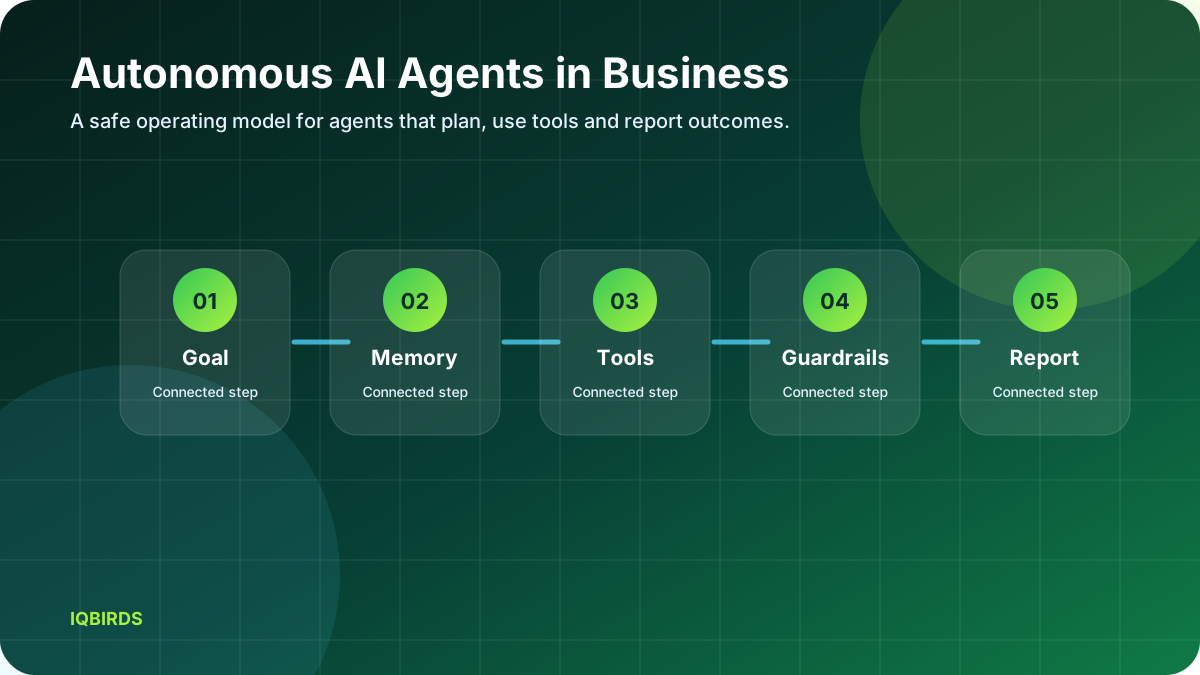
Autonomous AI agents are software systems powered by AI models and connected tools. They can work toward a defined goal with less step-by-step human instruction than traditional software. They may search knowledge bases, update CRMs, send drafts, analyze data, call APIs and coordinate tasks across systems.
The word autonomous should be understood carefully. In business, autonomy should be limited and governed. An agent might autonomously prepare a report, but a manager may approve it before it is sent to clients. An agent might autonomously score a lead, but a salesperson may confirm the final priority. The safest business agents combine automation with human oversight.
Industry platforms are moving in this direction. Microsoft, AWS, Google and OpenAI all provide tools or documentation for agent-style systems, tool use and workflow orchestration. This signals a shift from AI as a conversation interface toward AI as an operating layer for business processes.
Why Autonomous AI Agents Are the Future of Business Automation
Business automation has always promised speed, but older systems were brittle. They worked well when the input was predictable. They struggled when the customer wrote a messy message, when a document had unusual formatting or when the next step required judgment. Autonomous AI agents are useful because they can interpret unstructured inputs and decide which tool or workflow should be used next.
This matters for companies that run on emails, forms, spreadsheets, CRMs and documents. Much of the work is not technically difficult, but it is time-consuming. Employees spend hours reading, sorting, copying, summarizing and following up. Agents can take the first pass so humans start from a prepared result instead of a blank screen.
For technical background, see OpenAI tool-use documentation, Microsoft Copilot Studio documentation, and AWS Bedrock Agents documentation. These resources show how agent systems connect models to tools and business actions.
Core Capabilities of Autonomous AI Agents
Planning
Planning allows the agent to break a goal into steps. For example, “prepare a weekly sales report” may become: collect CRM data, compare pipeline changes, identify stalled deals, summarize wins, list next actions and format the report.
Tool use
Tool use lets the agent act through approved systems. Without tools, the agent only generates text. With tools, it can retrieve records, create tasks, update spreadsheets, draft emails and trigger notifications.
Memory and context
Memory helps the agent maintain useful context. This may include customer preferences, previous interactions, business rules or workflow history. Memory must be handled carefully because it can create privacy and accuracy risks if it is not governed.
Human escalation
Human escalation is essential. A well-designed agent knows when it is uncertain, when a request is sensitive and when approval is required. This prevents the system from acting beyond its authority.
Business Examples of Autonomous AI Agents
A sales follow-up agent can monitor new leads, check whether a response was sent, draft a personalized follow-up and alert the salesperson when a high-value lead is inactive. This directly supports revenue because speed and consistency matter in lead handling.
A document processing agent can read uploaded files, extract key fields, flag missing information and prepare a structured summary. This is useful for finance, insurance, legal intake, hiring, operations and service businesses that deal with forms and documents.
A marketing operations agent can monitor campaign performance, summarize results, suggest tests and create tasks for landing page improvements. The marketer still decides what to launch, but the agent reduces reporting time.
A customer support agent can classify requests, search approved knowledge and draft responses. It can also detect urgent issues and route them to a human. This improves speed while keeping support quality controlled.
Autonomous AI Agents vs Chatbots vs Automation
| Capability | Chatbot | Traditional automation | Autonomous AI agents |
|---|---|---|---|
| Primary role | Answer questions | Run fixed rules | Plan and execute goal-based tasks |
| Input handling | Conversational | Structured triggers | Structured and unstructured inputs |
| Tool use | Limited unless integrated | Predefined actions | Multiple approved tools |
| Best use | FAQ and support | Simple repeatable tasks | Complex workflows with context |
| Risk control | Content moderation | Rule testing | Permissions, logs and approval gates |
Roadmap for Adopting Autonomous AI Agents
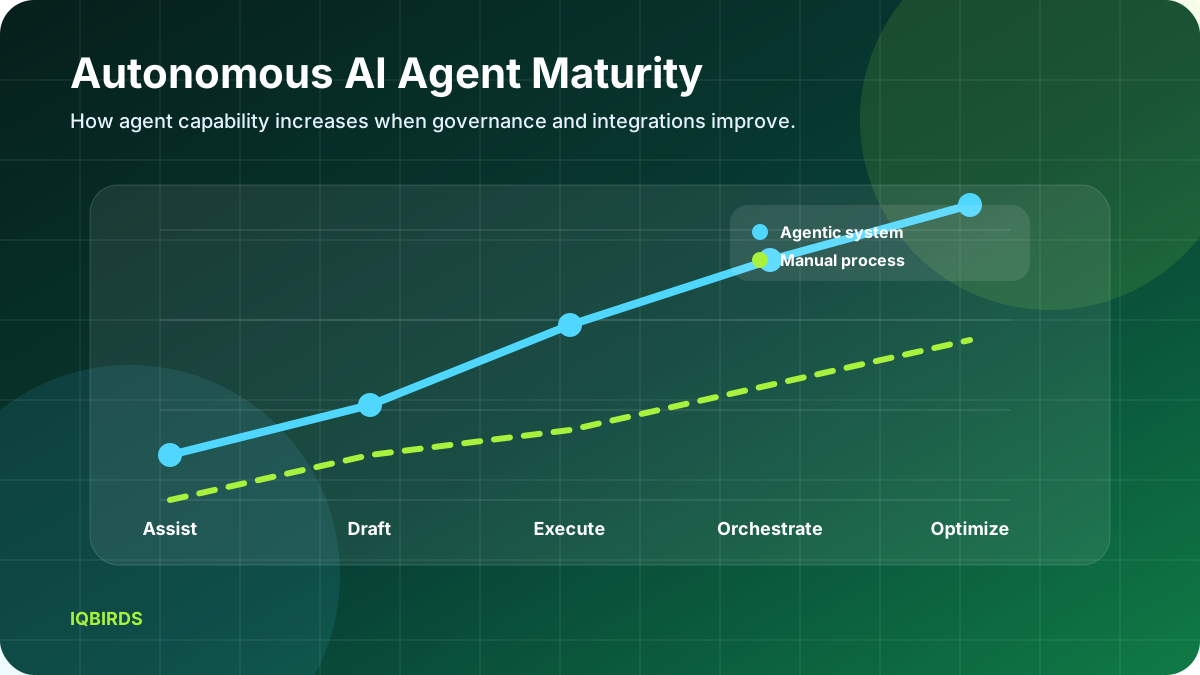
Start with an assistant-level agent. Let it draft, summarize and recommend before it takes actions. This helps the team build trust and identify weak instructions. After the drafts are reliable, allow the agent to create tasks or update low-risk fields. Only later should it trigger customer-facing messages or operational actions.
The second step is integration. Connect the agent to the CRM, forms, email, documents and reporting tools it needs. Keep permissions narrow. The agent should have enough access to complete the workflow, but not enough access to damage unrelated systems.
The third step is evaluation. Use real examples, failed cases and edge cases. Measure whether the agent saves time, improves response speed and reduces errors. If the agent creates more review work than it removes, the workflow needs redesign.
Risks and Guardrails
Autonomous agents can create risk if they are given too much freedom. Common risks include incorrect actions, poor data access controls, hallucinated explanations, weak audit trails and unclear ownership. These risks are manageable, but they cannot be ignored.
Guardrails include role-based permissions, action logs, approval gates, test environments, prompt versioning, fallback rules and human escalation. Businesses should also decide which tasks agents are not allowed to perform. Clear limits make the system easier to trust.
How to Measure Success
Measure time saved, response speed, task completion rate, error rate, customer satisfaction, revenue impact and employee adoption. Do not measure only how many tasks the agent completed. A bad agent can complete many tasks poorly. The right question is whether the agent improved a business outcome.
If your business wants this type of system built around real operations, IQBIRDS can help through AI automation services, AI agent development, AI integration services, and AI CRM development.
Frequently Asked Questions
What are Autonomous AI agents?
Autonomous AI agents are AI systems that can plan steps, use tools and work toward a defined goal with controlled human oversight.
Are autonomous agents safe for business use?
They can be safe when permissions, logs, approvals and escalation rules are built into the workflow.
How are agents different from chatbots?
Chatbots mainly answer questions, while agents can use tools and complete workflow steps.
What is the best first agent to build?
Lead follow-up, reporting, document intake and support triage are good first projects because they are measurable.
Will agents replace employees?
The practical goal is to reduce repetitive work, not remove accountability or human judgment.
The future of Autonomous AI agents will be shaped by trust. Businesses will not adopt agents only because they sound advanced. They will adopt agents that produce reliable results, explain what they did and allow humans to intervene when the work becomes sensitive or uncertain.
The future of Autonomous AI agents will be shaped by trust. Businesses will not adopt agents only because they sound advanced. They will adopt agents that produce reliable results, explain what they did and allow humans to intervene when the work becomes sensitive or uncertain.
The future of Autonomous AI agents will be shaped by trust. Businesses will not adopt agents only because they sound advanced. They will adopt agents that produce reliable results, explain what they did and allow humans to intervene when the work becomes sensitive or uncertain.
The future of Autonomous AI agents will be shaped by trust. Businesses will not adopt agents only because they sound advanced. They will adopt agents that produce reliable results, explain what they did and allow humans to intervene when the work becomes sensitive or uncertain.
The future of Autonomous AI agents will be shaped by trust. Businesses will not adopt agents only because they sound advanced. They will adopt agents that produce reliable results, explain what they did and allow humans to intervene when the work becomes sensitive or uncertain.
The future of Autonomous AI agents will be shaped by trust. Businesses will not adopt agents only because they sound advanced. They will adopt agents that produce reliable results, explain what they did and allow humans to intervene when the work becomes sensitive or uncertain.
The future of Autonomous AI agents will be shaped by trust. Businesses will not adopt agents only because they sound advanced. They will adopt agents that produce reliable results, explain what they did and allow humans to intervene when the work becomes sensitive or uncertain.
The future of Autonomous AI agents will be shaped by trust. Businesses will not adopt agents only because they sound advanced. They will adopt agents that produce reliable results, explain what they did and allow humans to intervene when the work becomes sensitive or uncertain.
The future of Autonomous AI agents will be shaped by trust. Businesses will not adopt agents only because they sound advanced. They will adopt agents that produce reliable results, explain what they did and allow humans to intervene when the work becomes sensitive or uncertain.
The future of Autonomous AI agents will be shaped by trust. Businesses will not adopt agents only because they sound advanced. They will adopt agents that produce reliable results, explain what they did and allow humans to intervene when the work becomes sensitive or uncertain.
The future of Autonomous AI agents will be shaped by trust. Businesses will not adopt agents only because they sound advanced. They will adopt agents that produce reliable results, explain what they did and allow humans to intervene when the work becomes sensitive or uncertain.
The future of Autonomous AI agents will be shaped by trust. Businesses will not adopt agents only because they sound advanced. They will adopt agents that produce reliable results, explain what they did and allow humans to intervene when the work becomes sensitive or uncertain.
The future of Autonomous AI agents will be shaped by trust. Businesses will not adopt agents only because they sound advanced. They will adopt agents that produce reliable results, explain what they did and allow humans to intervene when the work becomes sensitive or uncertain.
The future of Autonomous AI agents will be shaped by trust. Businesses will not adopt agents only because they sound advanced. They will adopt agents that produce reliable results, explain what they did and allow humans to intervene when the work becomes sensitive or uncertain.
The future of Autonomous AI agents will be shaped by trust. Businesses will not adopt agents only because they sound advanced. They will adopt agents that produce reliable results, explain what they did and allow humans to intervene when the work becomes sensitive or uncertain.
The future of Autonomous AI agents will be shaped by trust. Businesses will not adopt agents only because they sound advanced. They will adopt agents that produce reliable results, explain what they did and allow humans to intervene when the work becomes sensitive or uncertain.
The future of Autonomous AI agents will be shaped by trust. Businesses will not adopt agents only because they sound advanced. They will adopt agents that produce reliable results, explain what they did and allow humans to intervene when the work becomes sensitive or uncertain.
The future of Autonomous AI agents will be shaped by trust. Businesses will not adopt agents only because they sound advanced. They will adopt agents that produce reliable results, explain what they did and allow humans to intervene when the work becomes sensitive or uncertain.
The future of Autonomous AI agents will be shaped by trust. Businesses will not adopt agents only because they sound advanced. They will adopt agents that produce reliable results, explain what they did and allow humans to intervene when the work becomes sensitive or uncertain.
The future of Autonomous AI agents will be shaped by trust. Businesses will not adopt agents only because they sound advanced. They will adopt agents that produce reliable results, explain what they did and allow humans to intervene when the work becomes sensitive or uncertain.
Need AI Automation?
Discover how IQBirds helps businesses automate workflows and build custom digital products.