
AI Automation
How AI Turns Website Visitors into Qualified Leads
Most websites get more useful buying signals than business owners realize. A visitor may read a service page, compare pricing, return from a follow-up email, open a chatbot, download a guide, or spend several minutes on a case-study page. On their own, these actions look small. Together, they can show whether someone is casually browsing or seriously considering a solution.
That is where AI lead generation becomes powerful. Instead of treating every visitor the same, AI helps your website notice intent, qualify interest, score fit, route the right people into your CRM, and trigger timely follow-up. The goal is not to chase every click. The goal is to help your team focus on the visitors most likely to become real opportunities.
What AI Lead Generation Means for Your Website
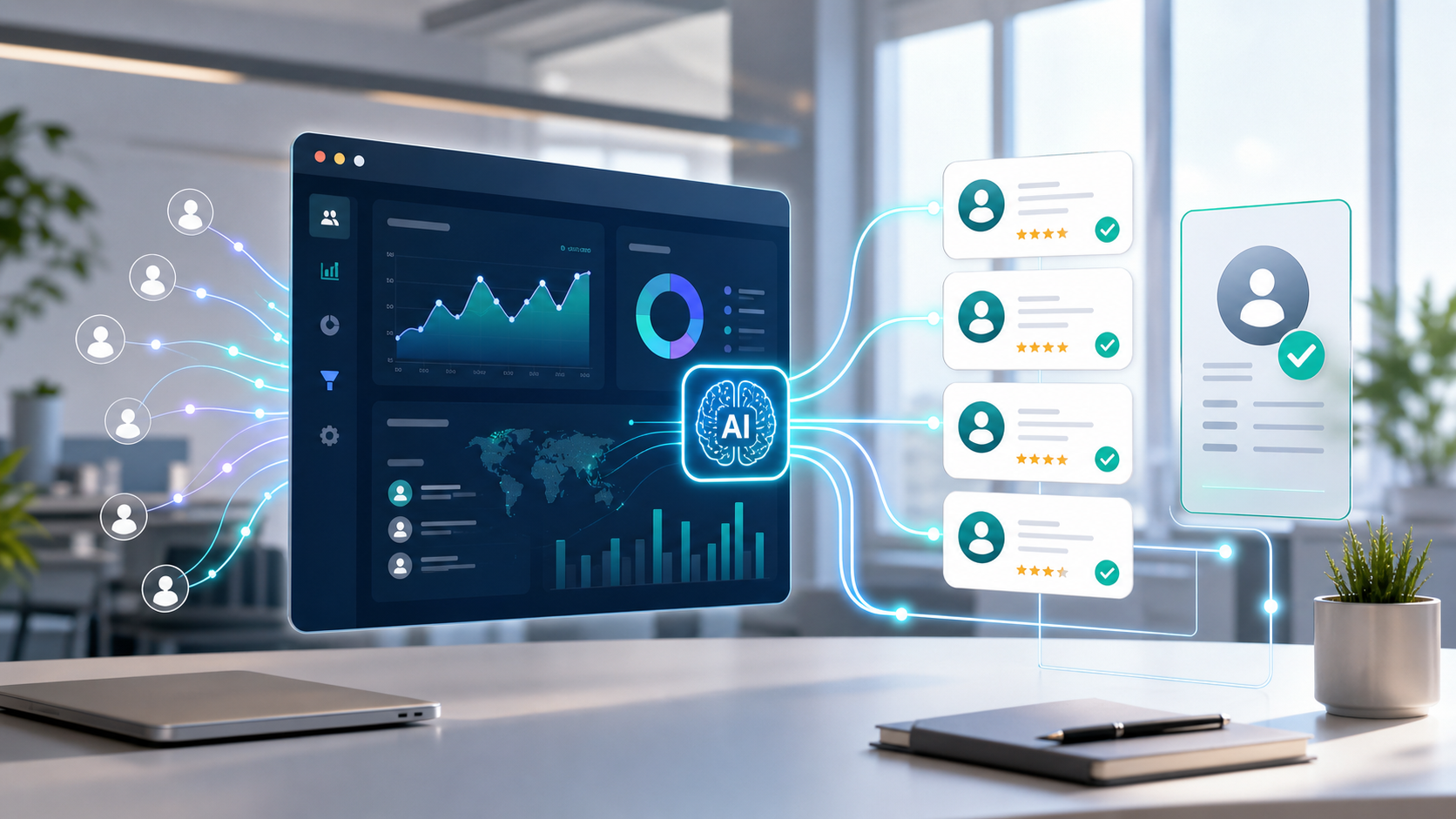
AI lead generation is the process of using artificial intelligence to identify, qualify, prioritize, and follow up with potential customers. On a website, this usually starts with visitor behavior. AI can look at page visits, form answers, chat questions, referral source, return visits, content downloads, and CRM history to understand what a visitor may need.
Traditional websites often wait for a visitor to fill out a contact form. AI-powered websites can do more. They can recognize buying intent earlier, ask better qualifying questions, personalize the next step, and send the visitor to the right workflow. A simple form submission can become a cleaner lead record with context, score, source, urgency, and recommended next action.
This matters because a lead is not only a name and email address. A qualified lead has enough fit, interest, and timing to deserve attention. AI helps separate serious prospects from low-intent traffic, spam, competitors, students, and visitors who are not ready yet.
Why Website Visitors Often Fail to Become Qualified Leads
Many businesses already generate traffic. However, they lose potential customers before the first real sales conversation. The problem is rarely one single page. It is usually a broken lead journey.
Some visitors have questions, but they do not want to fill out a long form. Others submit a form but receive a slow or generic reply. Meanwhile, some high-value prospects visit important pages, but your team never knows they were there. In addition, some visitors are not ready to buy. They need nurturing instead of a sales call. Without automation, these small differences are easy to miss.
Manual lead handling often leads to inconsistent results. One team member follows up quickly. Another waits until the next day. Someone else forgets to update the CRM. Meanwhile, lead data is scattered across forms, email inboxes, chat tools, ad platforms, and spreadsheets. As a result, qualifying leads becomes difficult.
How AI Understands Visitor Intent
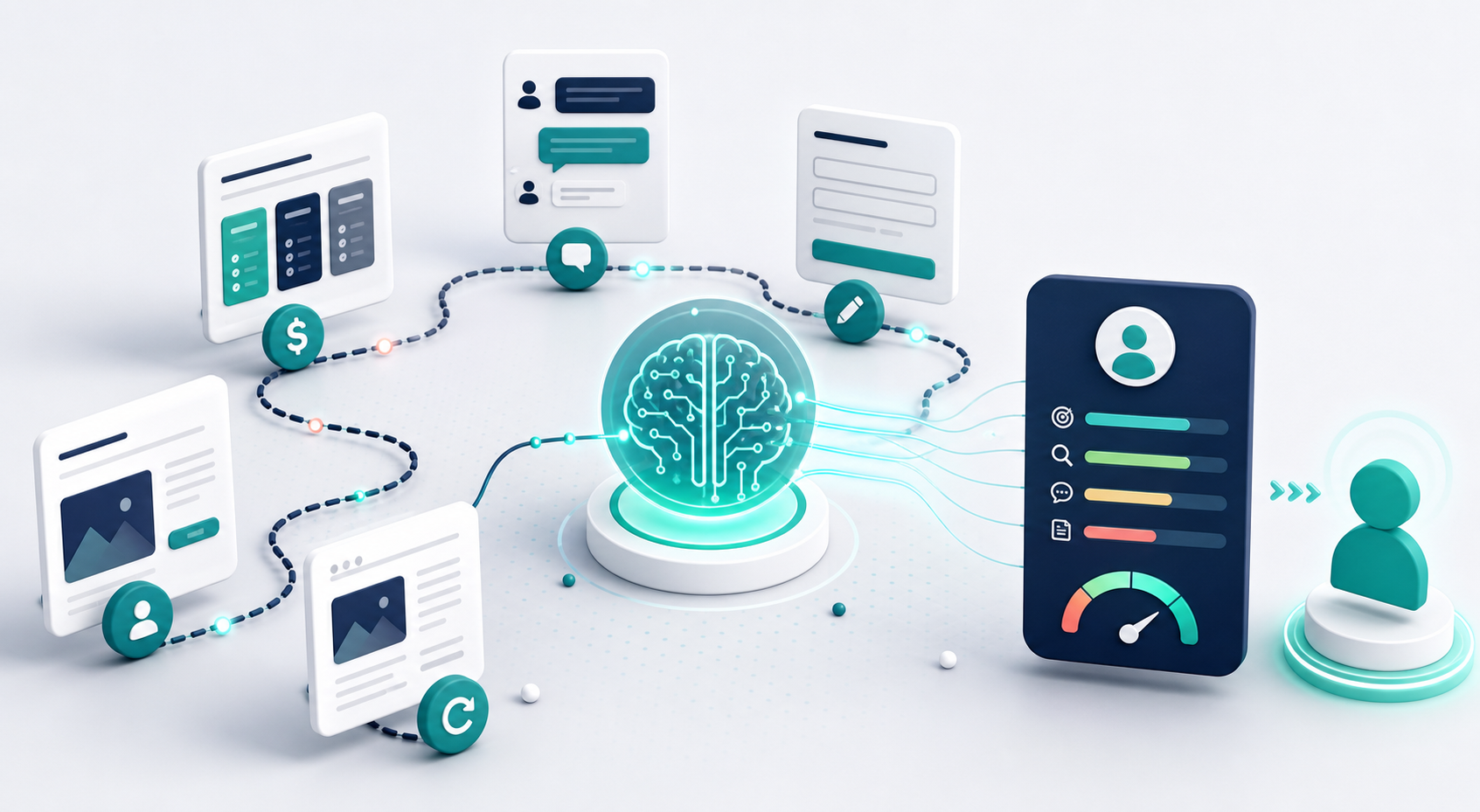
AI does not need to guess from one click. It works best when it combines several signals. A visitor who reads one blog post may simply be researching. A visitor who returns three times, checks a service page, opens a pricing section, asks a chatbot about implementation time, and submits a form is showing stronger intent.
Useful intent signals can include pages viewed, time on page, repeat visits, traffic source, search terms, form answers, chatbot questions, downloaded resources, email engagement, company size, location, industry, and past CRM activity. AI can group these signals and help decide whether the visitor is a marketing lead, sales-qualified lead, support request, partner inquiry, or low-quality submission.
For example, a visitor who lands on a guide about CRM automation may need education. A visitor who moves from that guide to an AI CRM service page may be comparing options. A visitor who then asks about migration, pricing, and integration is much closer to a real business conversation.
Practical AI Lead Generation Use Cases
AI can support many parts of the visitor-to-lead journey. A chatbot can qualify visitors with natural questions instead of a rigid form. A scoring model can rank leads based on engagement and fit. A CRM workflow can assign high-value prospects to the right salesperson. An email system can send helpful follow-up when a visitor is interested but not ready for a call.
Small businesses can use AI to respond faster to new inquiries. B2B companies can use it to identify which accounts are showing buying intent. Service businesses can use it to understand what a visitor needs before the consultation. Ecommerce and local businesses can use it to follow up with visitors who show interest but leave without taking action.
Manual Lead Handling vs AI Lead Generation
| Feature | Manual Lead Handling | AI Lead Generation |
|---|---|---|
| Speed | Depends on staff availability and working hours | Responds, routes, and scores leads instantly |
| Qualification | Based on form fields and manual review | Uses behavior, fit, engagement, and CRM context |
| Follow-up | Easy to delay, forget, or send generically | Triggers timely and personalized next steps |
| CRM quality | Often incomplete or inconsistent | Creates cleaner records with source and intent data |
| Sales focus | Teams may chase every inquiry equally | Teams can prioritize higher-quality opportunities |
| Scalability | Requires more manual work as traffic grows | Handles more visitor volume without adding chaos |
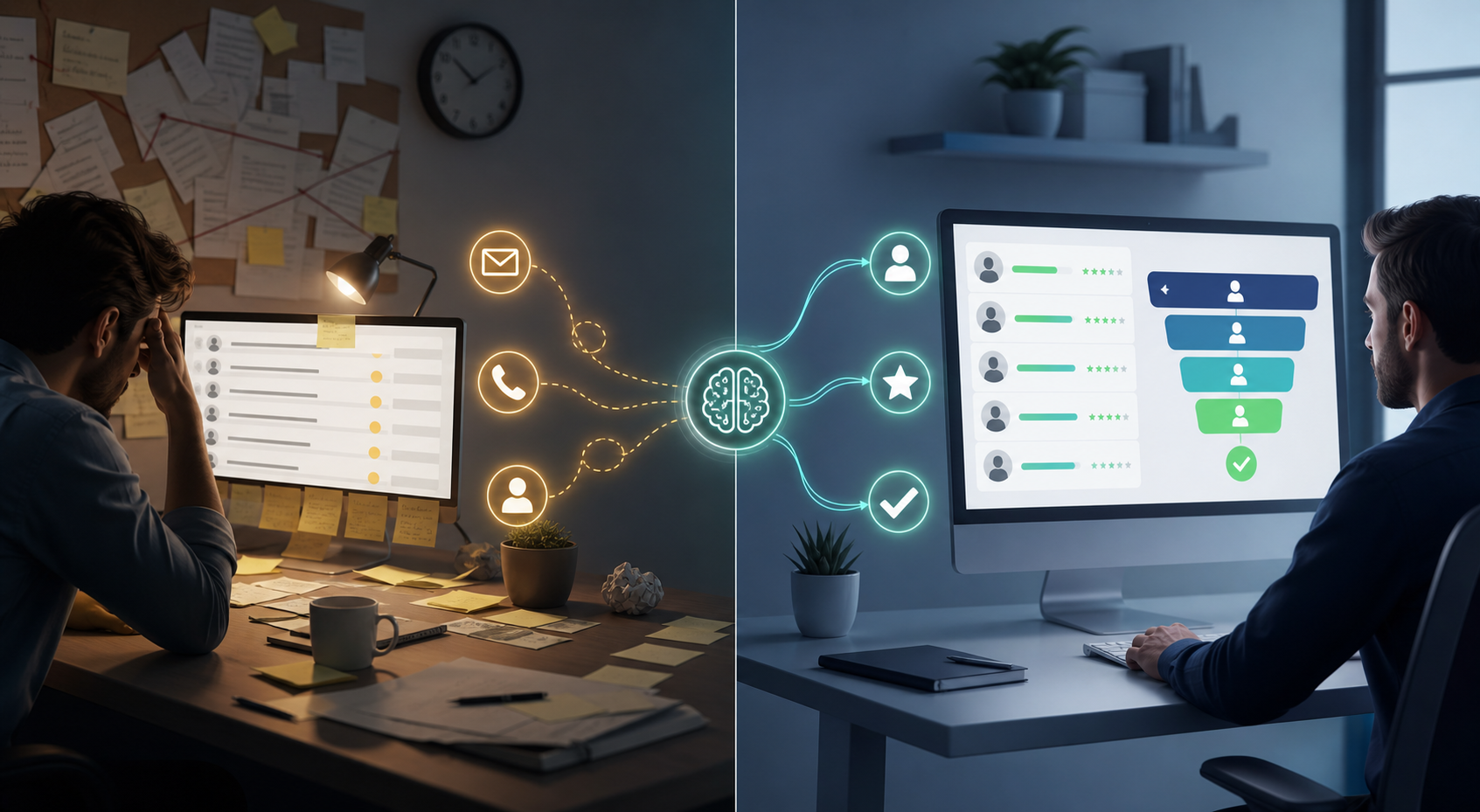
The table shows the main difference clearly: manual lead handling depends on people noticing and reacting at the right time, while AI lead generation keeps the process consistent. It does not remove people from sales. It helps people spend more time on the conversations that deserve human attention.
Where AI Lead Generation Fits in Your Website and CRM
A strong setup connects your website, analytics, CRM, email, and sales process. If you are building this foundation, IQBIRDS resources on AI Automation Services, AI CRM Development, AI Marketing Automation, and AI Integration Services explain how these systems work together.
You can also connect this topic with related IQBIRDS guides like how to automate lead capture from website forms to CRM using AI, how AI can automate follow-up emails for new website leads, and why fast lead response beats bigger marketing budgets.
For external background, HubSpot explains how lead scoring can use fit and engagement data to prioritize prospects, Salesforce describes AI features such as predictive scoring and lead qualification, IBM defines intelligent automation as a way to scale decision-making across organizations, and Google Analytics explains how key events can measure important visitor actions. These ideas support the same practical point: better data creates better lead decisions.
Helpful references: HubSpot lead scoring software, Salesforce AI for sales, IBM intelligent automation, and Google Analytics key events.
Step-by-Step Guide to Turning Visitors into Qualified Leads
1. Map the visitor journey
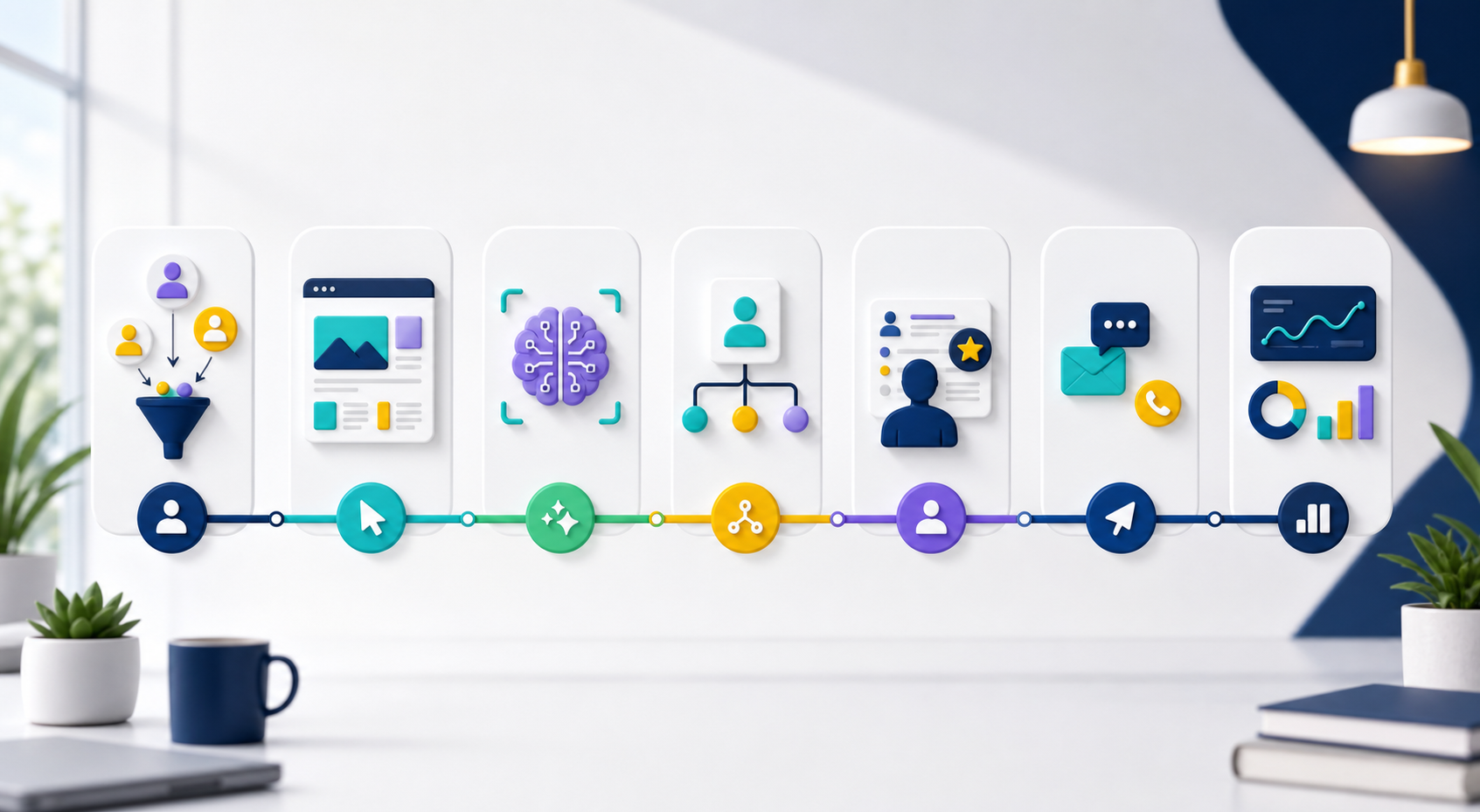
Start by listing the pages, forms, chat prompts, downloads, and calls to action that visitors use before they become leads. Identify the moments that show real interest, such as viewing service pages, asking pricing questions, or returning after an email.
2. Define what a qualified lead means
Qualification should be specific. A qualified lead may need the right business type, budget range, problem, urgency, location, service need, or decision-maker role. If your team cannot define quality, AI will not know what to prioritize.
3. Track the right conversion actions
Measure actions that actually matter. Contact forms, consultation requests, demo bookings, pricing clicks, chatbot handoffs, downloadable guides, and repeat visits can all become useful signals. Avoid tracking every tiny action as if it has equal value.
4. Connect your website to your CRM
Your CRM should receive more than a name and email. It should receive source, page history, service interest, campaign data, form answers, score, and recommended next step. This gives your sales team context before the first conversation starts.
5. Add AI scoring and routing
Use AI to rank leads by fit and intent. High-priority leads can go to sales quickly. Medium-intent leads can enter an educational nurture sequence. Low-quality or unclear inquiries can be reviewed before they take up sales time.
6. Keep human review in the process
AI should support judgment, not replace it. Add human review for high-value deals, unusual inquiries, sensitive industries, or cases where the score and the message do not match. Human oversight keeps the system practical and trustworthy.
7. Measure and improve
Review lead quality, response time, booked calls, sales opportunities, and closed revenue. If AI sends too many weak leads to sales, adjust the scoring rules. If good leads are missed, add new signals and improve the workflow.
Key Benefits of AI Lead Generation
- Faster response times for high-intent website visitors
- Cleaner CRM records with visitor source and behavior context
- Better lead scoring based on fit, timing, and engagement
- Less manual copying between forms, email, chat, and CRM tools
- More consistent follow-up across new inquiries
- Smarter nurturing for visitors who are interested but not ready
- Better sales focus because urgent leads are easier to identify
- Clearer reporting on which pages and campaigns produce quality leads
Common Mistakes to Avoid
Automating before mapping the process
If your current lead process is unclear, AI will only move the confusion faster. Map the journey first, then automate the parts that create real value.
Scoring every action too highly
Not every click means buying intent. Reading one blog post is different from requesting a consultation. Give more weight to actions that show clear business interest.
Ignoring CRM data quality
AI lead generation depends on clean data. Duplicate contacts, missing fields, unclear sources, and old records can weaken scoring and reporting.
Removing human review too early
Human review is especially important when you are still learning which signals predict quality. Keep people involved until the workflow proves reliable.
Sending generic automated messages
Fast follow-up is helpful, but generic follow-up can feel cold. Use the visitor’s interest, form answer, or page context to make the message relevant.
How IQBIRDS Helps Your Business
IQBIRDS helps businesses turn website traffic into a more organized, measurable, and sales-ready lead system. The work usually starts with workflow mapping. We identify where leads come from, what information is missing, which tools are disconnected, and where follow-up slows down.
From there, IQBIRDS can help build AI lead capture, CRM automation, chatbot qualification, tool integrations, human approval workflows, lead routing, reporting dashboards, and follow-up systems. The goal is practical implementation, not complicated technology for its own sake. Your website should help your team understand who is interested, what they need, and what should happen next.
FAQs
What is AI lead generation?
AI lead generation uses artificial intelligence to identify, qualify, score, and follow up with potential customers. On a website, it can use visitor behavior, form answers, chat activity, and CRM data to decide which leads deserve attention.
How does AI turn website visitors into qualified leads?
AI turns visitors into qualified leads by tracking useful intent signals, asking qualifying questions, scoring fit and interest, sending data to the CRM, and triggering the right follow-up workflow.
Does AI lead generation replace a sales team?
No. AI helps sales teams prioritize and respond faster. People are still needed for trust, discovery, negotiation, complex questions, and relationship building.
What website data is useful for AI lead scoring?
Useful data includes page visits, repeat visits, service interest, form answers, chatbot questions, downloads, email engagement, traffic source, company information, and CRM history.
Can small businesses use AI lead generation?
Yes. Small businesses can start with simple workflows such as lead capture, CRM routing, automated follow-up, chatbot qualification, and alerts for high-intent inquiries.
What is the biggest risk of AI lead generation?
The biggest risk is automating a weak process. If your qualification rules, CRM data, or follow-up strategy are unclear, AI may create more noise instead of better leads.
How can IQBIRDS help my business?
IQBIRDS can help map your lead journey, connect your website and CRM, build AI qualification workflows, automate follow-up, add human review, and create reporting dashboards that show which leads and campaigns perform best.
Conclusion
AI lead generation helps your website do more than collect form submissions. It helps your business understand visitor intent, qualify inquiries, improve CRM records, trigger faster follow-up, and guide sales teams toward the best opportunities.
The best results come from a clear process. Define what a qualified lead means, connect your tools, track meaningful actions, keep human review where it matters, and improve the workflow over time. If your website already gets traffic but your team still struggles with slow response, messy CRM data, or weak follow-up, IQBIRDS can help you build a smarter AI-powered lead generation system.
Contact IQBIRDS to plan an AI lead generation workflow that turns more website visitors into qualified leads and gives your sales team better context from the first conversation.
Need AI Automation?
Discover how IQBirds helps businesses automate workflows and build custom digital products.