
AI Automation
How AI Helps Agencies Scale Without Hiring
Agencies grow by selling expertise, speed, and reliable delivery. However, the moment client work increases, the same small team can quickly become overloaded. More clients mean more briefs, meetings, revisions, reports, campaigns, proposals, content requests, and follow-up messages.
That is where AI agency automation becomes useful. It helps agencies increase capacity without immediately hiring more people. Instead of asking the team to work longer hours, AI can handle repeatable admin work, organize client requests, draft first versions, summarize conversations, prepare reports, and keep projects moving.
This does not mean replacing strategists, designers, marketers, writers, or account managers. In practice, the best agencies use AI to protect their people from low-value tasks so they can spend more time on judgment, creativity, client relationships, and growth.

Why Agencies Hit a Capacity Ceiling
Most agencies do not struggle because the team lacks talent. They struggle because delivery depends on too many manual steps. A client sends notes in one place, files in another, and feedback in a third. Then the account manager copies details into a task tool, reminds the creative team, updates a spreadsheet, and prepares a status report.
At low volume, this feels normal. As the agency grows, however, manual coordination becomes the bottleneck. Work gets stuck between tools. Then a revision is missed. Soon, report preparation takes hours. Meanwhile, a proposal sits unfinished. Because of that, a manager spends the day chasing updates instead of improving the client relationship.
Hiring can help, but hiring is not always the first answer. New people need onboarding, management, payroll, training, tools, and quality control. Before adding headcount, agencies should ask whether the current workflow is ready to scale.
What AI Agency Automation Actually Does
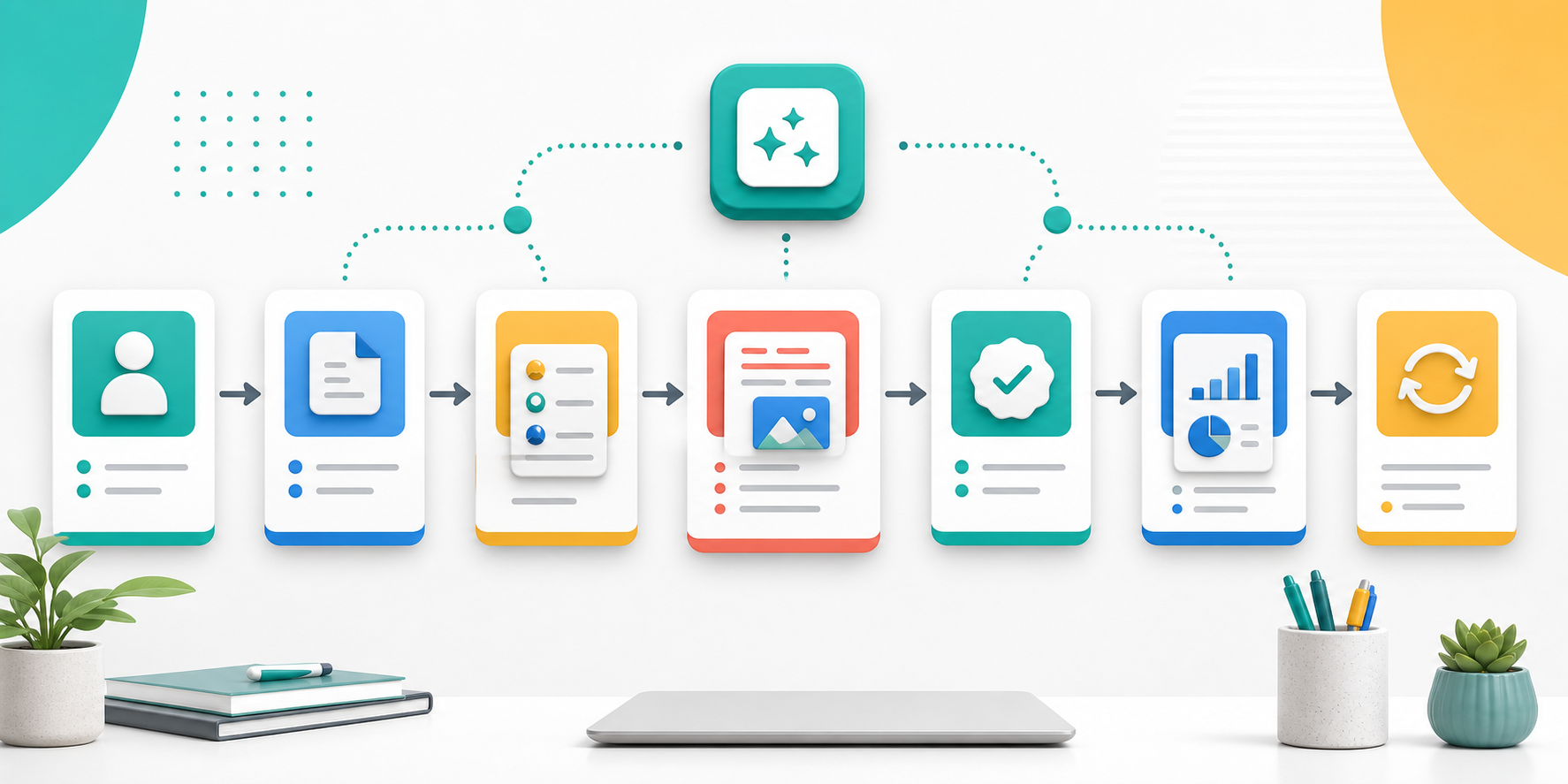
AI agency automation connects repeatable agency tasks into a smoother system. It can capture requests, classify work, summarize details, create tasks, draft assets, check status, prepare reporting notes, and remind team members when action is needed.
For example, a new client request can be turned into a structured brief. Then the system can assign the right team, create a checklist, pull related brand notes, and notify the account manager. After that, AI can draft a first outline, summarize feedback, and prepare a weekly update.
The goal is not to make every decision automatic. Instead, the goal is to remove repeated coordination work so people can focus on thinking, creating, reviewing, and serving clients well.
Agency Workflows AI Can Improve First
Lead intake and qualification
AI can help sort new inquiries by service type, budget range, urgency, company size, and fit. As a result, the sales team can spend less time reading every form manually and more time speaking with strong prospects.
Client onboarding
Onboarding often repeats the same steps: collect assets, confirm logins, document goals, schedule kickoff calls, and create project folders. AI can turn those steps into a guided workflow that keeps clients and staff aligned from day one.
Creative briefs and task creation
Many delays begin with unclear briefs. AI can convert client notes, call summaries, and form responses into structured briefs. Then it can create tasks with deadlines, owners, reference links, and review steps.
Content and campaign drafting
Agencies can use AI to draft first versions of emails, ad concepts, blog outlines, social captions, campaign briefs, and landing page wireframes. However, human review should shape the strategy, tone, accuracy, and final polish.
Reporting and insights
Reporting can consume hours every month. AI can gather performance data, summarize changes, highlight patterns, and draft client-friendly explanations. Account managers can then focus on recommendations instead of copy-pasting numbers.
Client follow-up and retention
AI can remind teams when a client has gone quiet, when a renewal is approaching, or when a campaign needs a check-in. Because of that, agencies can protect relationships without relying on memory alone.
Hiring More Staff vs AI Agency Automation
| Area | Scaling by Hiring | Scaling With AI Agency Automation |
|---|---|---|
| Capacity | Increases after recruiting and onboarding | Improves quickly by reducing repeated admin work |
| Cost | Adds salary, tools, benefits, and management time | Adds system cost but can improve output from the current team |
| Consistency | Depends on each person following the process | Standard workflows guide briefs, tasks, reports, and follow-up |
| Speed | More people can help, but handoffs may increase | Tasks, summaries, drafts, and reminders can move faster |
| Quality control | Requires training and review across more people | Checklists, approvals, and templates make review easier |
| Client experience | Can improve if the new team is managed well | Can improve through faster updates, clearer reports, and fewer misses |
The table does not mean agencies should never hire. It means hiring should not be the only growth lever. If a team is already buried under repeated manual work, adding more people can simply create a larger version of the same messy system. AI helps clean the system first.

Why Standard Operating Procedures Matter Before AI
Before an agency automates delivery, it needs simple standard operating procedures. These do not have to be long manuals. They can be short checklists that explain how to qualify a lead, create a brief, prepare a report, review a draft, approve a campaign, and hand work back to the client.
Without clear procedures, AI has to guess. That creates inconsistent briefs, unclear tasks, and uneven client updates. With clear procedures, AI can follow the agency’s preferred way of working. For this reason, SOPs are one of the most important foundations for AI agency automation.
Start by documenting the workflows your best team members already follow. Then turn those steps into templates, required fields, and approval rules. After that, AI can help repeat the process across more clients while your senior people protect the strategy and quality.
Where AI Fits in Your Agency Tech Stack
Most agencies already use several systems: CRM, project management, documents, spreadsheets, email, chat, analytics, proposal tools, reporting dashboards, and client portals. AI becomes useful when it connects these systems instead of sitting as another separate app.
If your agency needs that connected foundation, IQBIRDS can help with AI Automation Services, AI CRM Development, AI Integration Services, and AI Marketing Automation. These are especially useful when client work is spread across tools that do not talk to each other.
You can also review IQBIRDS guides on automating Google Sheets, CRM, and email workflows with AI and how AI eliminates repetitive business bottlenecks. External resources from IBM on intelligent automation, Salesforce marketing automation, HubSpot marketing automation, and Asana work management show why connected workflows matter for teams that manage many moving parts.
Step-by-Step Guide to Scale With AI Without Hiring
1. Map the agency delivery process
First, write down how work moves from lead to proposal, onboarding, brief, production, review, reporting, and renewal. Include every handoff, tool, document, approval, and client touchpoint.
2. Find repeated low-value work
Next, identify work that happens often but does not require deep strategy. This may include creating tasks, summarizing calls, updating spreadsheets, preparing first drafts, sending reminders, or collecting report notes.
3. Standardize briefs and inputs
AI performs better when inputs are clear. Create standard fields for goals, audience, offer, tone, deliverables, deadlines, approvals, and success metrics. This makes automation more reliable.
4. Automate one workflow first
Choose one workflow with obvious value. Client onboarding, brief creation, report summaries, proposal follow-up, and task creation are good starting points. Then test it before expanding to other areas.
5. Add human review points
Because agency work depends on judgment, do not remove humans from important decisions. Use AI for drafts, summaries, routing, and reminders. Keep people responsible for strategy, final creative approval, and client-sensitive communication.
6. Connect your CRM and project tools
After that, connect the CRM, project management system, email, documents, and reporting tools. When these tools share context, your team spends less time copying information and more time using it.
7. Measure capacity gains
Finally, track the business impact. Measure turnaround time, report preparation time, overdue tasks, revision cycles, response speed, client satisfaction, and revenue per team member.

Key Benefits for Agencies
- More client work handled by the existing team
- Faster briefs, summaries, and status updates
- Cleaner handoffs between sales, strategy, creative, and account teams
- Less manual reporting work
- More consistent client onboarding
- Fewer missed approvals and follow-ups
- Better use of CRM and project data
- More time for strategy, creative thinking, and client relationships
Most importantly, these benefits support healthier growth. The agency can increase capacity without turning every week into an emergency or expecting the team to absorb every new client through overtime.
Common Mistakes to Avoid
Automating before defining the process
If the process is unclear, AI will only move confusion faster. Map the workflow, define owners, and agree on approval rules before building automation.
Using AI to replace strategy
Clients hire agencies for judgment, not just output. AI can support research, drafts, and organization, but the strategic point of view should still come from experienced people.
Ignoring brand voice and client context
Generic AI output can damage trust. Store client preferences, brand notes, approved claims, audience details, and previous decisions so each workflow has useful context.
Skipping quality control
Every AI-assisted workflow needs review. Add checklists for accuracy, tone, permissions, claims, data, links, and final approvals before anything reaches a client.
Measuring activity instead of outcomes
Do not judge automation only by how many tasks it creates. Measure whether it reduces delivery time, improves client communication, increases retention, or raises profit per account.
How IQBIRDS Helps Your Business
IQBIRDS helps agencies build practical AI automation around real delivery workflows. The process often starts with mapping how leads, clients, tasks, assets, approvals, and reports currently move through the agency.
From there, IQBIRDS can help design CRM automation, AI workflows, tool integrations, lead management systems, client journey automation, human approval steps, and reporting dashboards. The goal is to help your current team work with more clarity and less repetitive admin pressure.
If your agency is growing but the team feels stretched, AI agency automation can give you a smarter next step before hiring becomes necessary.
Frequently Asked Questions
What is AI agency automation?
AI agency automation uses AI and connected workflows to reduce repeated agency tasks such as intake, briefs, task creation, reporting, follow-up, and client communication.
Can AI help agencies scale without hiring?
Yes. AI can increase capacity by reducing manual coordination, preparing first drafts, organizing data, and speeding up reporting. However, agencies still need people for strategy, quality control, and client relationships.
Which agency tasks should be automated first?
Start with tasks that are repeated often and easy to review, such as lead intake, onboarding checklists, brief creation, status updates, report summaries, and follow-up reminders.
Does AI replace creative teams?
No. AI can support creative teams with research, outlines, drafts, and organization, but people should guide strategy, concept direction, tone, taste, and final approvals.
How does AI improve agency reporting?
AI can gather data, summarize performance changes, highlight patterns, and draft client-friendly explanations. Account managers can then focus on insights and next steps.
Is AI automation useful for small agencies?
Yes. Small agencies often benefit quickly because even a few automated workflows can reduce admin time, improve response speed, and make delivery more consistent.
How can IQBIRDS help my business?
IQBIRDS can map your agency workflows, connect your CRM and project tools, build AI automation systems, create approval processes, and design dashboards that help your team scale with better control.
Conclusion
AI helps agencies scale without hiring by removing the repeated work that slows good teams down. It can organize intake, improve briefs, speed up reports, draft first versions, trigger reminders, and create clearer handoffs across the agency.
The best starting point is not a random AI tool. Start with one painful workflow. Clean the process. Add human review. Connect the tools. Then measure whether the agency can handle more work with less stress and better consistency.
If your agency wants to grow without immediately adding headcount, contact IQBIRDS. We can help you build practical AI agency automation that supports your team, protects quality, and creates room for smarter growth.
Need AI Automation?
Discover how IQBirds helps businesses automate workflows and build custom digital products.