
AI Search
How Businesses Should Prepare for AI Search
AI search optimization is becoming important because customers are changing how they look for answers. Instead of typing a short keyword and clicking through several pages, many people now ask detailed questions and expect AI-powered search tools to summarize the best options. That means your business website needs to be clear enough for people and AI systems to understand, trust, and use.
For business owners, this does not mean traditional SEO disappears. It means SEO has to become more useful. Your website still needs crawlable pages, strong content, internal links, local signals, and good user experience. However, it also needs answer-focused pages, structured data, visible expertise, and conversion paths that match how buyers ask questions now.
What AI Search Optimization Means
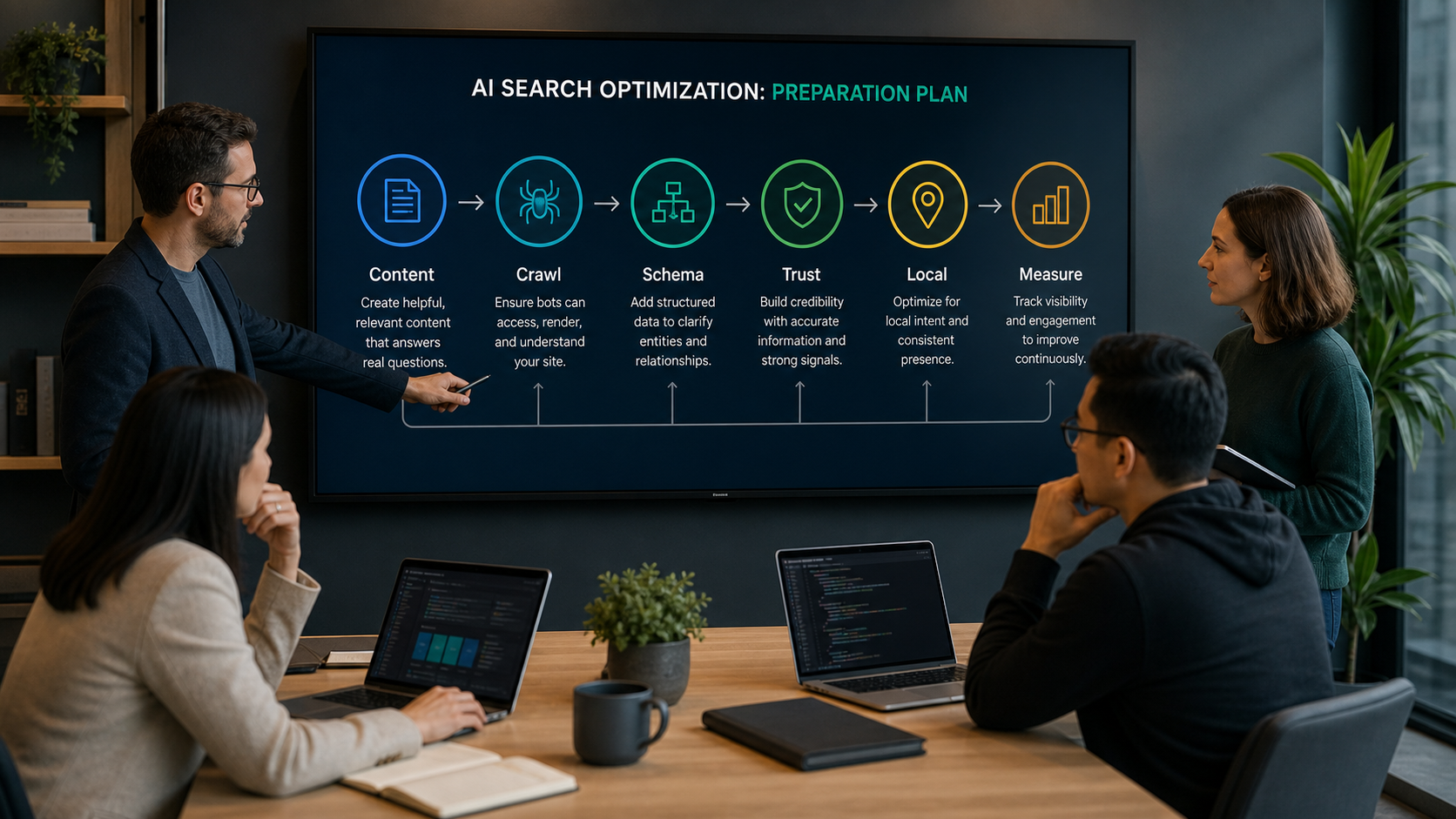
AI search optimization means preparing your website so it can perform well in AI-powered discovery experiences. These experiences may include Google AI Overviews, Google AI Mode, Bing Copilot Search, ChatGPT search, and other answer engines. The details vary by platform, but the core idea is similar: AI systems look for useful, current, trustworthy information that can help answer a user’s question.
That changes the way businesses should think about websites. A page should not only repeat a keyword. It should explain the problem, answer common questions, show how the business helps, and provide enough context for a real buyer to take the next step. In practice, AI search optimization rewards websites that are helpful, specific, and technically accessible.
It also creates a new kind of competition. Your business may not only compete for a ranking position. It may compete to be cited, summarized, compared, or recommended inside an AI-generated answer. Therefore, the quality of your content, the clarity of your service pages, and the trust signals around your business matter more than ever.
Why Businesses Need to Prepare Now
Customers Are Asking Longer Questions
Traditional search often focused on short phrases. AI search is more conversational. A customer might ask, “Which automation service can help a local business respond to leads faster?” or “How do I choose an AI CRM setup for a service company?” These questions include intent, context, and a buying problem.
Because of that, business websites need content that handles full questions. Short service pages with generic promises are less useful. Better pages explain who the service is for, what problem it solves, how the process works, what tools may be involved, and what outcome the customer can expect.
AI Search Needs Clear Sources
AI search systems often use sources from the web to ground answers. If your public pages are difficult to crawl, light on detail, or unclear about your services, they become weaker sources. Meanwhile, a competitor with stronger pages may be easier to cite or summarize.
This is why source readiness matters. Your website should make your services, location, expertise, process, reviews, FAQs, and contact paths easy to find. As a result, the website becomes more helpful for both search systems and customers.
Traffic Patterns May Change
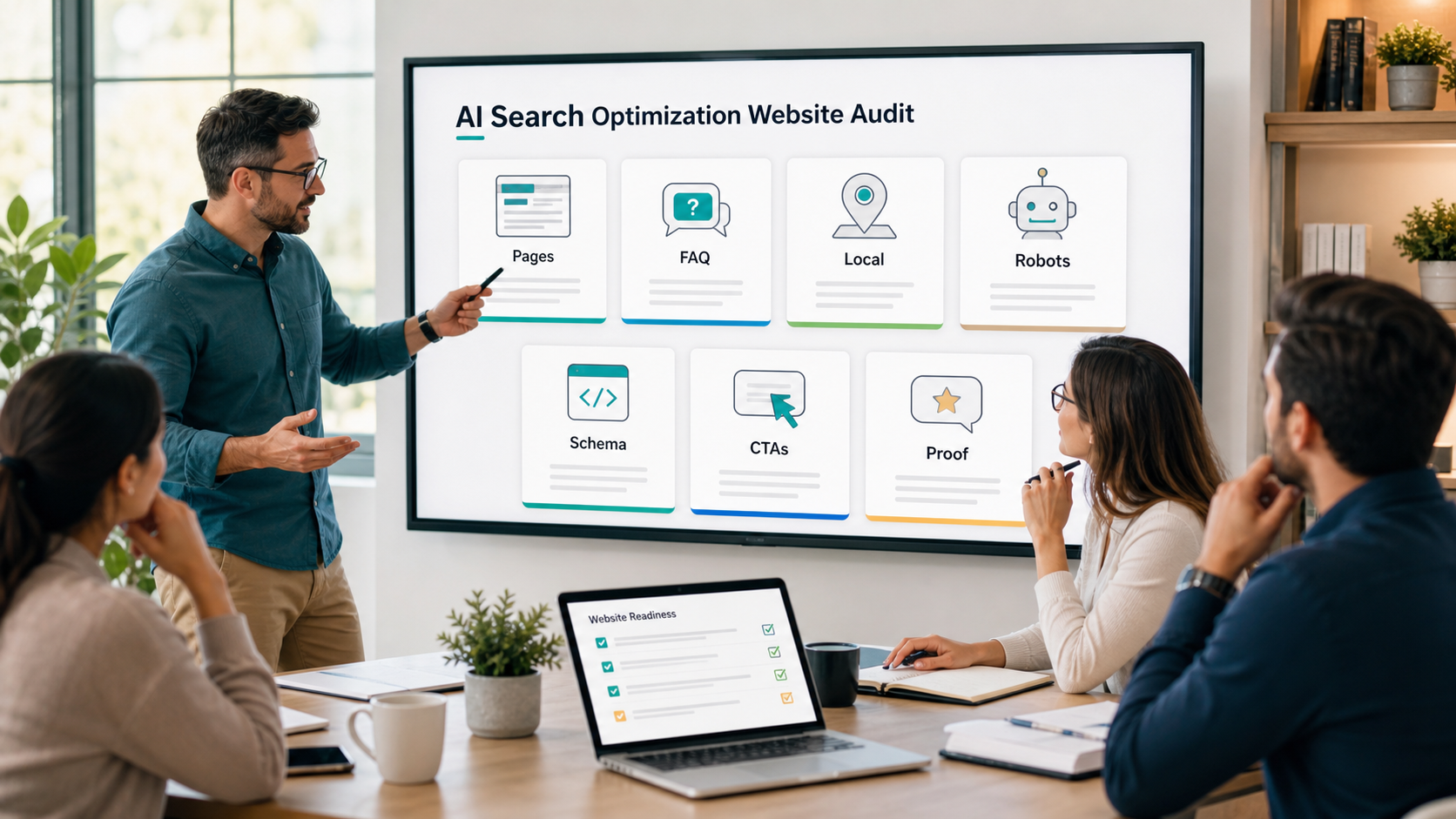
AI answers can satisfy some searches before the user clicks. However, they can also send more qualified visitors when the searcher needs a service, quote, consultation, or local provider. Therefore, businesses should stop measuring success only by raw traffic. The better question is whether the website attracts the right visitors and turns them into leads.
For this reason, AI search optimization should connect content strategy with conversion strategy. A helpful answer is good. A helpful answer that leads the right person to a clear next step is better.
What Official Guidance Tells Businesses
Google Search Central says the same core SEO best practices still apply to AI features. That includes making pages crawlable, creating helpful content, using internal links, providing a good page experience, using visible text, and adding structured data that matches the page. In short, Google is not asking businesses to abandon SEO. It is asking them to make websites genuinely useful and technically accessible.
Google’s AI optimization guidance also explains that generative AI features can use retrieval from the search index, which means fresh, crawlable, high-quality pages still matter. Meanwhile, OpenAI’s publisher FAQ explains how public websites can be discovered and cited in ChatGPT search. Microsoft has also described grounding as a key part of AI-powered search, which reinforces the need for reliable web sources.
The practical message is simple. A business should not chase shortcuts. Instead, it should make its website clear, crawlable, accurate, helpful, and easy to act on.
Unprepared Website vs AI Search Optimized Website
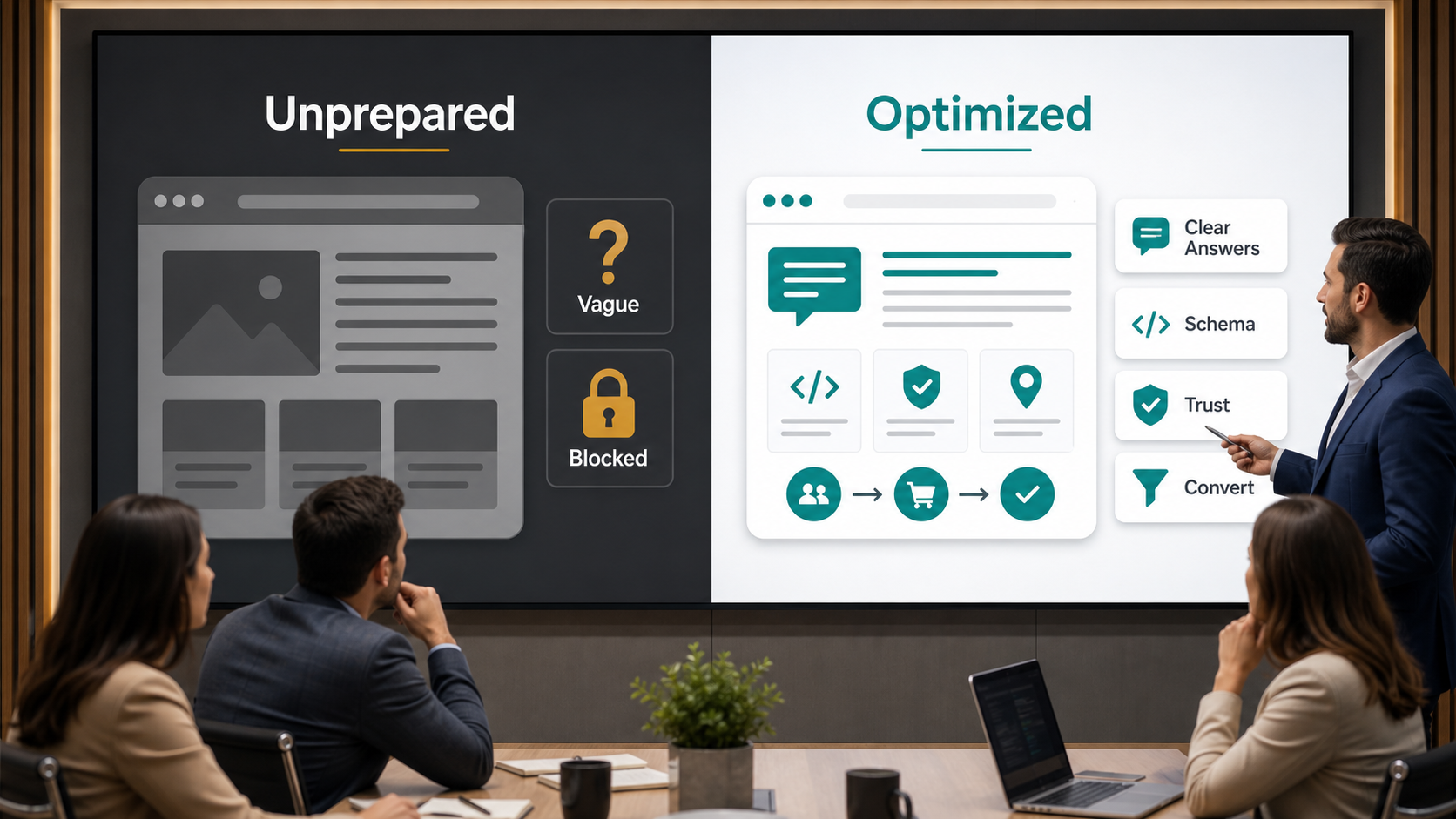
| Website area | Unprepared website | AI search optimized website |
|---|---|---|
| Content | Generic service copy with limited detail | Clear answers to real customer questions |
| Crawlability | Important pages blocked, hidden, or hard to render | Public pages are accessible, indexable, and easy to understand |
| Structured data | No schema or schema that does not match the page | Relevant schema supports visible content and business details |
| Trust | Few proof points, unclear expertise, weak contact details | Reviews, process, location, team, examples, and clear policies |
| Internal links | Pages sit separately with little topic connection | Services, FAQs, guides, and conversion pages connect naturally |
| Conversion | Visitors read and leave without direction | Each page guides visitors toward the right next step |
This table shows why AI search optimization is not only about technical SEO. A prepared website gives AI systems clear information and gives human visitors a better experience. The strongest websites do both at the same time.
Where Businesses Should Start
The first step is not adding more random blog posts. Start by improving the pages closest to revenue. Service pages, location pages, comparison pages, FAQ pages, and contact paths usually matter most. These pages should explain the customer’s problem, the business solution, the process, the proof, and the next action.
For example, businesses investing in AI automation services, AI integration services, or AI CRM development should make those service pages specific and connected. A visitor should quickly understand what the service does, who it helps, what systems it connects, and how to request help.
Related content also matters. Guides such as why AI search is reshaping business websites and how AI is changing customer expectations can support the broader topic. At the same time, the website should connect these educational pages to services and lead workflows so visitors know what to do next.
Step-by-Step AI Search Optimization Plan
Step 1: Collect Real Customer Questions
Gather questions from sales calls, forms, emails, live chat, support tickets, reviews, and consultations. These questions reveal what people actually want to know before they choose a business. Then group them by service, location, problem, and buying stage.
Step 2: Audit Your Existing Pages
Next, review your service pages, blogs, FAQs, local pages, and contact pages. Ask whether each page gives a clear answer, shows proof, includes a next step, and can be easily crawled. If a page is vague, thin, or outdated, mark it for improvement.
Step 3: Rewrite Pages Around Intent
After the audit, improve pages around customer intent. A buyer wants to know what you do, whether you solve their problem, what makes you credible, and how to start. Use clear headings, short paragraphs, examples, FAQs, and direct explanations.

Step 4: Add Structured Data Carefully
Use schema where it fits the visible page content. Article schema, FAQ schema, LocalBusiness schema, Organization schema, breadcrumbs, and service-related structured data can help search systems understand the page. However, schema should support real content, not replace it.
Step 5: Check Crawl Access
Review robots.txt, noindex tags, sitemap coverage, page speed, JavaScript rendering, security tools, and CDN settings. Important public pages should be accessible to search systems. If useful pages are blocked by mistake, AI search tools may not be able to discover or cite them.
Step 6: Strengthen Proof and Local Signals
Add clear business details, service areas, reviews, examples, process information, team expertise, contact information, and consistent local listings. For local or service businesses, this proof helps customers and search systems understand that the business is real and relevant.
Step 7: Measure Leads and Quality
Finally, measure form submissions, calls, booked appointments, qualified leads, assisted conversions, and questions customers ask after finding your site. AI search may change traffic volume, so lead quality and conversion paths matter more than visits alone.
Key Benefits of AI Search Optimization
- Better visibility for detailed customer questions
- Clearer service pages that support faster buying decisions
- Stronger chances of being cited or linked in AI search experiences
- Improved trust through proof, reviews, local details, and expertise
- Cleaner website structure for search systems and visitors
- Better conversion paths from discovery to contact
These benefits work together. When your website answers better questions, search systems can understand it more easily. Meanwhile, visitors who arrive from AI-powered discovery get clearer guidance and a stronger reason to contact your business.
Common Mistakes to Avoid
The first mistake is chasing AI search with thin content. A page that repeats a phrase without real detail will not become useful just because the phrase appears often. Focus on helpful answers instead.
The second mistake is ignoring technical access. If pages are blocked, hidden, slow, or difficult to render, strong writing may still struggle to be discovered. Crawlability is part of strategy now.
The third mistake is using schema incorrectly. Structured data should match the page and support visible content. Misleading schema can create confusion and does not fix weak information.
The fourth mistake is forgetting trust. AI search optimization is not only about answers. It is also about credibility. Add proof that your business is real, experienced, reachable, and relevant.
The fifth mistake is measuring only traffic. A smaller number of qualified visitors can be more valuable than many visitors who never contact you. Track outcomes, not just impressions.
How IQBIRDS Helps Your Business
IQBIRDS helps businesses prepare for AI search optimization with practical website strategy, content improvements, technical review, and automation support. We can audit your website, identify missing answers, improve service pages, add schema, strengthen internal links, and make your website easier for people and search systems to understand.
We can also connect your website to CRM and automation workflows so AI search traffic turns into real business opportunities. For example, IQBIRDS can help capture form details, route leads, score inquiries, trigger follow-ups, and create reporting dashboards that show which pages produce qualified leads.
The goal is simple. Your website should explain your value clearly, earn trust, support AI-powered discovery, and guide the right visitors toward contact, booking, or consultation.
Frequently Asked Questions
What is AI search optimization?
AI search optimization is the process of preparing your website so AI-powered search tools can understand, trust, cite, and recommend your content when users ask relevant questions.
How is AI search optimization different from SEO?
Traditional SEO focuses on rankings, traffic, and search visibility. AI search optimization still uses SEO fundamentals, but it adds more focus on clear answers, source trust, structured data, crawl access, and citation readiness.
Does my business need new content for AI search?
Sometimes yes, but the first step is usually improving existing service pages, FAQs, local pages, and conversion paths. New content should answer real customer questions that your current website does not handle well.
Is structured data required for AI search optimization?
Structured data is not a magic requirement, but it can help search systems understand your content when it matches the visible page. It works best alongside useful content and clear website structure.
Can small businesses benefit from AI search optimization?
Yes. Small businesses can benefit because AI search often answers specific questions about services, locations, comparisons, and buying decisions. Clear local and service pages can help small businesses become more discoverable.
How long does AI search optimization take?
Simple improvements can begin quickly, such as rewriting key pages, adding FAQs, and fixing crawl issues. Larger improvements, such as content architecture, schema, and conversion tracking, usually happen over several weeks or months.
How can IQBIRDS help my business?
IQBIRDS can audit your website, improve AI search optimization, strengthen service pages, add schema, fix content gaps, connect lead workflows, and build reporting that shows which pages create qualified opportunities.
Final Thoughts
AI search optimization is not about tricking search engines or chasing every new feature. It is about making your website clearer, more useful, easier to access, and more trustworthy. Businesses that prepare now can build stronger pages for both human visitors and AI-powered discovery systems.
Start with customer questions, improve your most important pages, check crawl access, add useful schema, strengthen proof, and measure qualified leads. IQBIRDS can help you turn AI search preparation into a practical website strategy that supports real business growth.
Need AI Automation?
Discover how IQBirds helps businesses automate workflows and build custom digital products.