
AI Automation
How Businesses Waste Leads Without AI Automation
Most businesses do not lose leads because people do not care.
They lose leads because the process is too slow, too manual, and too easy to break.
A lead fills out a form. Someone gets an email notification. The lead waits. The sales team is busy. The CRM is updated later, or not updated at all. A follow-up reminder is forgotten. A warm lead becomes cold before anyone has a real conversation.
This happens every day in small businesses, agencies, service companies, startups, and sales teams. Marketing works hard to generate interest, but the lead management process quietly leaks opportunities before they become revenue.
AI lead automation helps close those gaps.
It does not mean replacing your sales team. It means using AI and automation to capture leads faster, qualify them better, route them to the right person, draft follow-ups, update the CRM, and keep the pipeline moving.
In this guide, we will look at how businesses waste leads without AI automation, where the biggest leaks happen, and how to build a smarter lead workflow that protects more opportunities.
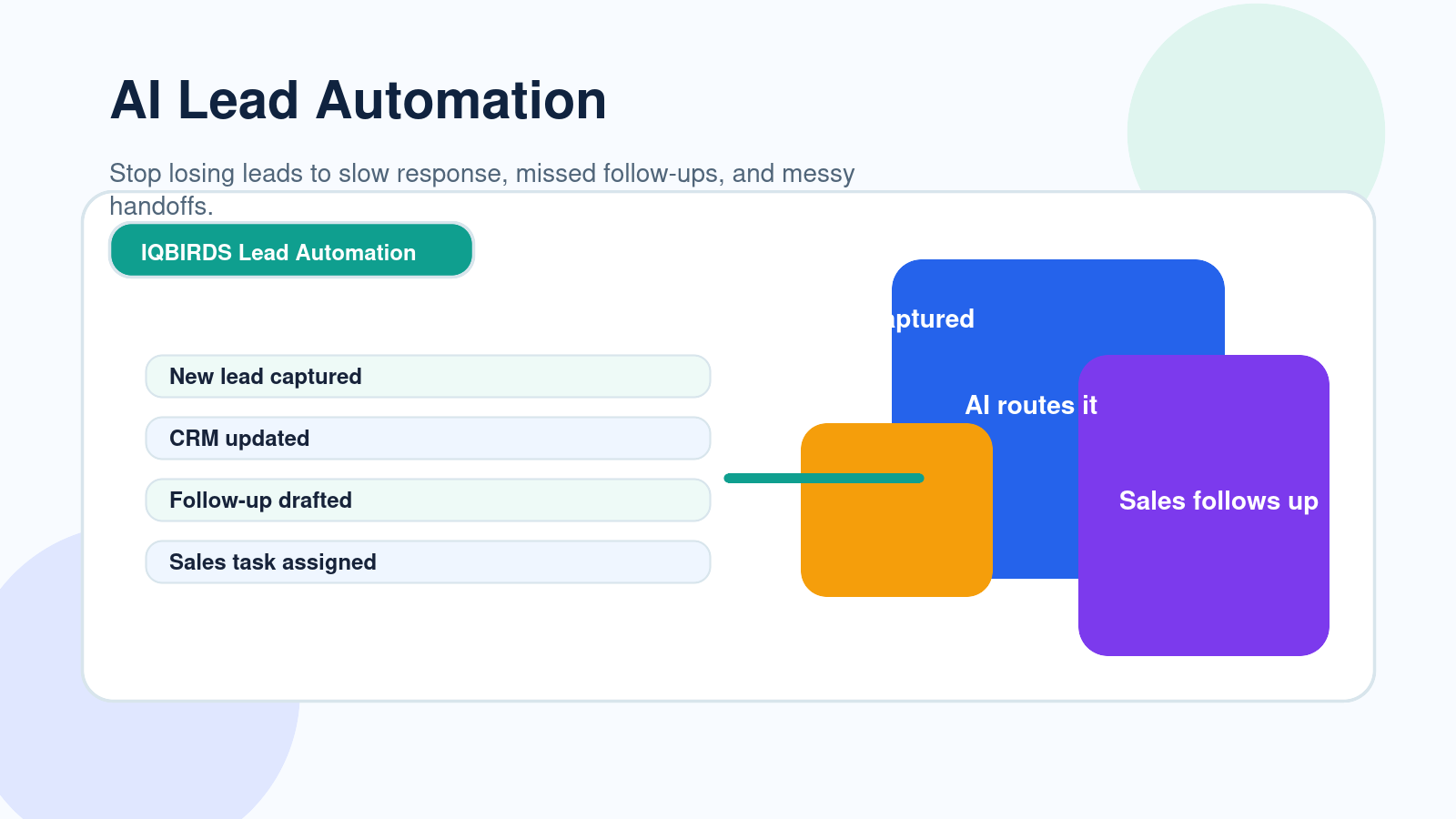
What Lead Waste Really Means
Lead waste happens when a business pays for attention but fails to turn that attention into a real sales opportunity.
It can happen after a website form submission, a chatbot conversation, a phone call, a landing page conversion, a social media message, a referral, or an email inquiry.
The lead may be interested. The problem is the business does not respond fast enough, does not follow up properly, or does not manage the lead with enough consistency.
Lead waste is not always visible. A company may see leads coming in and assume the sales process is working. But behind the scenes, many leads are never called, never added to the CRM, never nurtured, or never assigned to the right person.
Why lead waste is expensive
Every lead has a cost.
You may pay for ads, SEO, content, email marketing, social media, referrals, events, or outbound campaigns. Even organic leads cost time and effort to generate.
When those leads are wasted, the business loses more than one contact. It loses marketing spend, sales time, future revenue, customer data, and a chance to learn what the market wants.
That is why AI lead automation is not only a sales tool. It is a business process automation strategy for protecting the value your marketing already creates.
Where Businesses Waste Leads Without AI Automation
1. Slow response time
Speed matters when someone shows interest.
If a prospect fills out a form and waits hours or days for a reply, they may contact another business. The lead was warm when they submitted the form, but the delay made the opportunity weaker.
Manual response processes often depend on someone checking email, opening a spreadsheet, forwarding the lead, or remembering to create a CRM task.
AI lead automation can respond to the trigger immediately. It can create a CRM record, send a notification, draft a personalized reply, and assign the right team member without waiting for manual checking.
2. Poor lead routing
A good lead can still be wasted if it goes to the wrong person.
This happens when leads are assigned manually, when there are no clear routing rules, or when different teams handle different types of inquiries.
For example, a high-value enterprise lead may be sent to a general inbox. A local service inquiry may be sent to the wrong location. A support request may be treated like a sales lead.
AI can classify the lead based on message content, location, service type, urgency, budget signals, or company size. Then the workflow can route the lead to the correct owner.
3. Missed follow-ups
Many leads are not lost on the first conversation. They are lost because nobody follows up.
A prospect says, “Contact me next week.” A salesperson plans to follow up. Then other work gets in the way.
Without automation, follow-up depends on memory, calendar discipline, and manual CRM updates. That is risky, especially when the team is busy.
AI lead automation can create follow-up tasks, draft reminder emails, trigger nurture sequences, and alert the sales team when a lead re-engages.
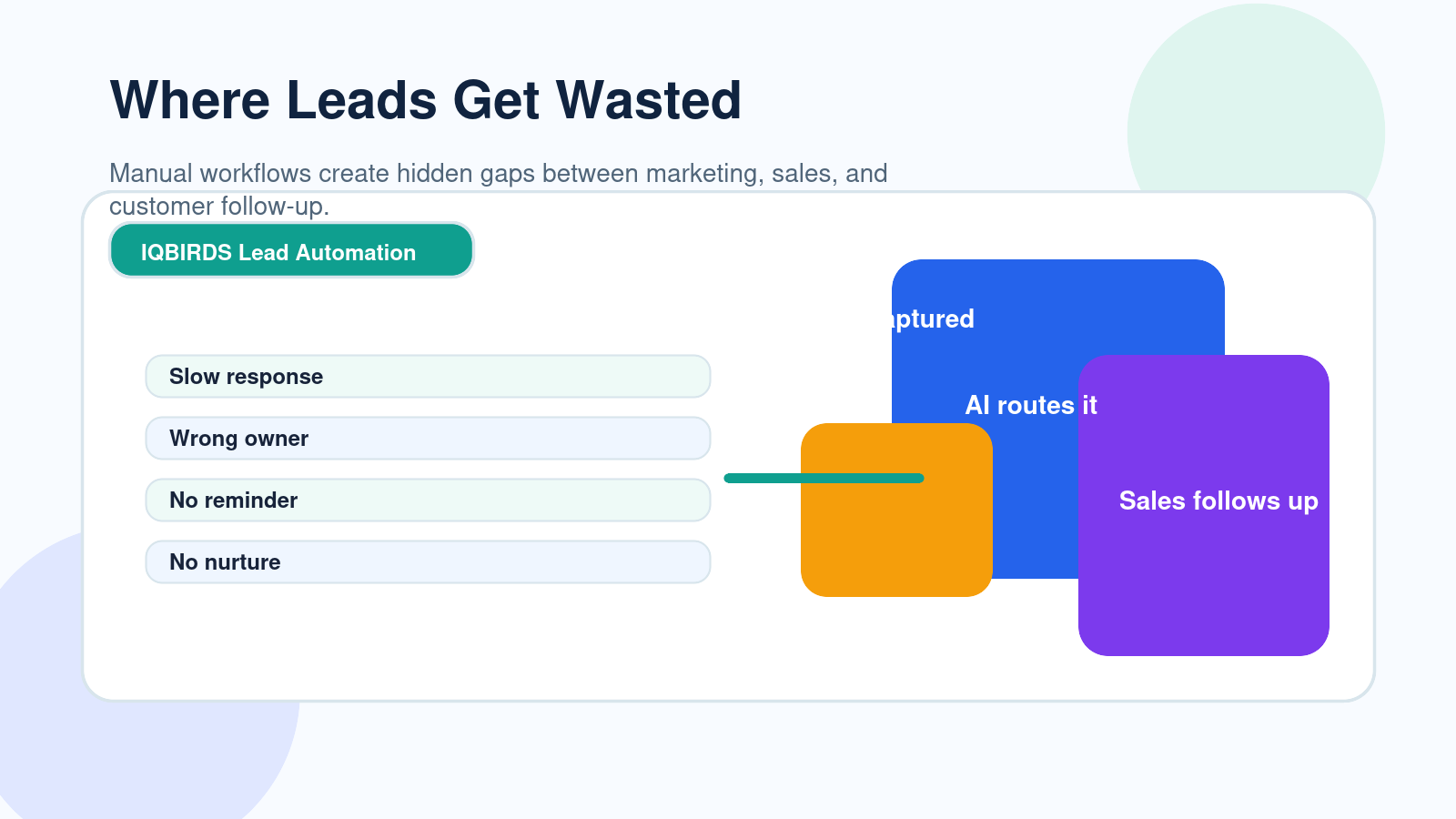
4. Messy CRM data
A CRM is only useful when the data is clean.
Manual lead entry often creates incomplete names, missing phone numbers, inconsistent company names, duplicate contacts, unclear lead sources, and wrong pipeline stages.
When CRM data is messy, sales managers cannot see what is happening. Marketing cannot measure lead quality. Salespeople waste time searching for information instead of selling.
AI can help extract key details from lead forms, emails, call notes, and chat messages. It can summarize the inquiry, fill fields, flag missing data, and reduce duplicate records.
5. Weak lead qualification
Not every lead needs the same response.
Some leads are ready to buy. Some need education. Some are a poor fit. Some are urgent. Some are only researching.
Without AI lead scoring or qualification rules, teams may treat every lead the same way. That means strong leads do not get enough attention, while weak leads consume too much time.
AI can help identify buying signals, urgency, service fit, company size, location, and intent. The goal is not to let AI make every sales decision. The goal is to help the team prioritize better.
Manual Lead Management vs AI Lead Automation
| Lead Management Area | Manual Process | AI Lead Automation |
|---|---|---|
| Lead capture | Form notification goes to inbox | Lead is captured and logged instantly |
| Response time | Depends on team availability | Immediate alert, draft, or reply workflow |
| Lead routing | Assigned manually or guessed | Routed by rules, intent, location, or fit |
| CRM updates | Manual copy-paste and missing fields | Automatic field updates and summaries |
| Follow-up | Easy to forget | Tasks, reminders, and nurture flows trigger automatically |
| Lead scoring | Based on manual review | AI can flag urgency and buying signals |
| Reporting | Hard to trust when data is incomplete | Cleaner data gives better pipeline visibility |
| Scalability | More leads require more manual work | Higher volume can be handled with less admin effort |
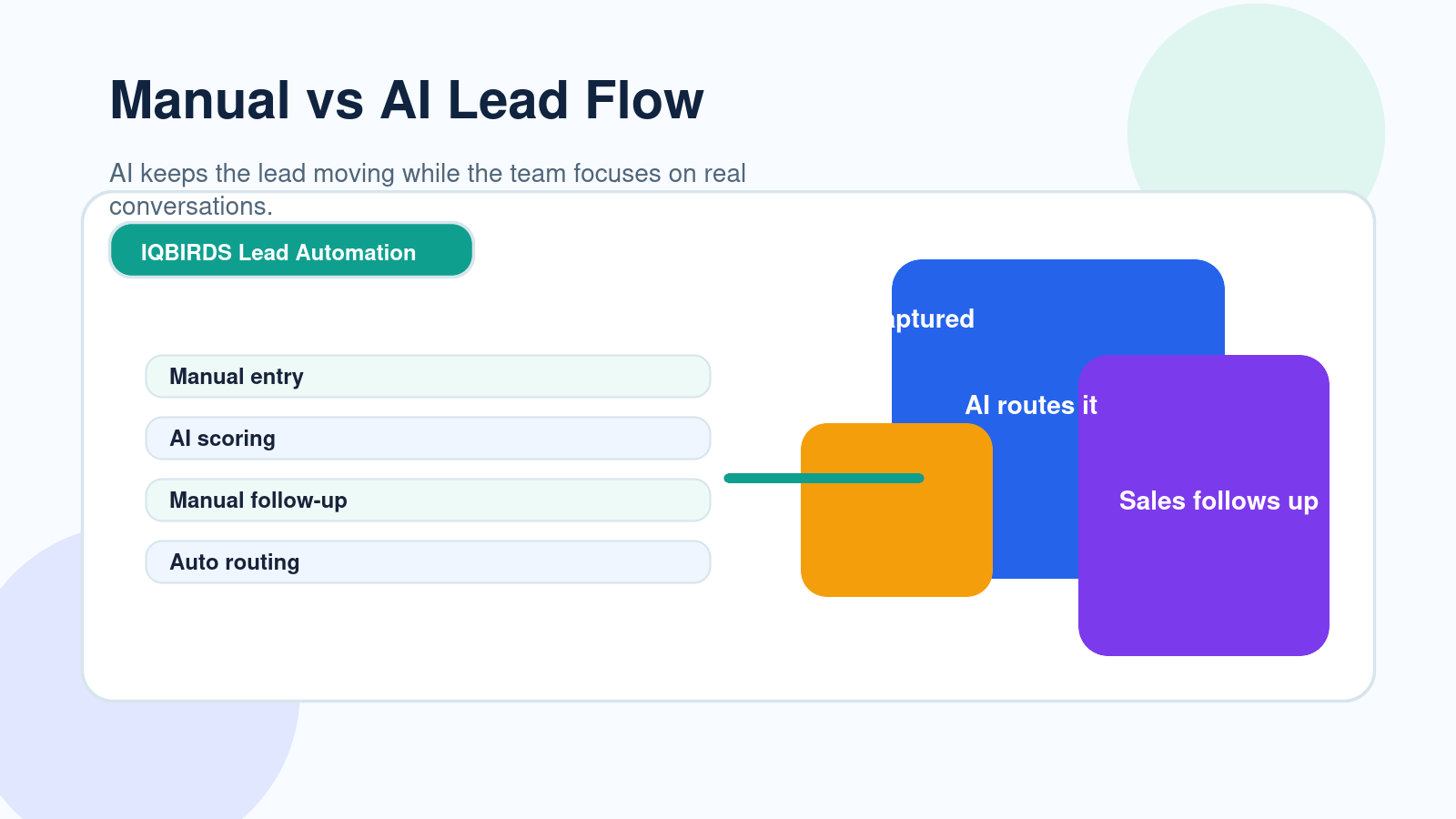
The table shows why manual lead management breaks as volume grows. A small number of leads can be handled by hand, but the process becomes harder to manage when leads arrive from many channels. AI lead automation improves speed, consistency, and visibility while keeping the sales team focused on conversations that matter.
Useful Research and Related IQBIRDS Reading
Lead management and workflow automation are closely connected. CRM platforms such as HubSpot and Salesforce focus on organizing lead data and sales activity, while automation platforms such as Microsoft Power Automate help connect triggers, apps, and business processes.
For related IQBIRDS reading, see Can AI Replace Your Business Operations Team?, AI Workflow vs Human Workflow: Where Automation Wins, and Hidden Costs of Manual Business Processes in 2026.
If your business wants help building a smarter lead process, explore AI Automation Services, AI Integration Services, and AI CRM Development.
Useful external references include HubSpot Lead Management, Salesforce Lead Management, Microsoft Power Automate, and Google Analytics Events.
Step-by-Step Guide to Stop Wasting Leads
Step 1: Map every lead source
Start by listing every place leads come from.
This may include website forms, landing pages, phone calls, chatbots, email, LinkedIn, Facebook, Google Ads, referrals, webinars, directories, and offline events.
If you do not know where leads enter the business, you cannot protect them properly.
Step 2: Track what happens after capture
For each lead source, write down what happens next.
Who receives the notification? Is the lead added to the CRM? Is a task created? Is the first reply sent automatically? Is there a follow-up reminder?
This step usually reveals the biggest leaks.
Step 3: Define lead quality rules
Decide what makes a lead important.
Useful signals may include budget, service requested, urgency, company size, location, job title, message content, source, or previous engagement.
AI can help detect these signals, but the business should define what matters first.
Step 4: Automate lead capture and CRM updates
Connect your forms, inboxes, chat tools, and landing pages to your CRM.
When a lead arrives, the system should create or update the contact, add the source, summarize the inquiry, and assign the correct stage.
This protects the lead from disappearing in an inbox.
Step 5: Add routing and alerts
Build routing rules so the right person gets the right lead.
For example, enterprise leads can go to senior sales, local inquiries can go to the right branch, urgent requests can trigger immediate alerts, and low-fit leads can enter a nurture flow.
Step 6: Build follow-up automation
Create follow-up workflows for leads that do not respond immediately.
This can include email drafts, scheduled reminders, nurture sequences, task creation, and alerts when the lead clicks, replies, books a call, or visits an important page.
Step 7: Review results and improve
Track response time, contact rate, booked calls, lead-to-opportunity conversion, follow-up completion, and CRM data quality.
AI lead automation should improve over time. If the workflow creates confusion, adjust the rules and keep the team involved.
Key Benefits of AI Lead Automation
- Faster response to new inquiries
- Fewer leads lost in inboxes or spreadsheets
- Cleaner CRM records and better pipeline visibility
- More consistent lead routing
- Better follow-up discipline across the sales team
- Smarter prioritization of high-intent leads
- Improved lead nurturing for prospects not ready to buy
- Less manual admin work for sales and operations teams
- Better reporting for marketing and sales decisions
- Higher confidence that every lead is handled properly
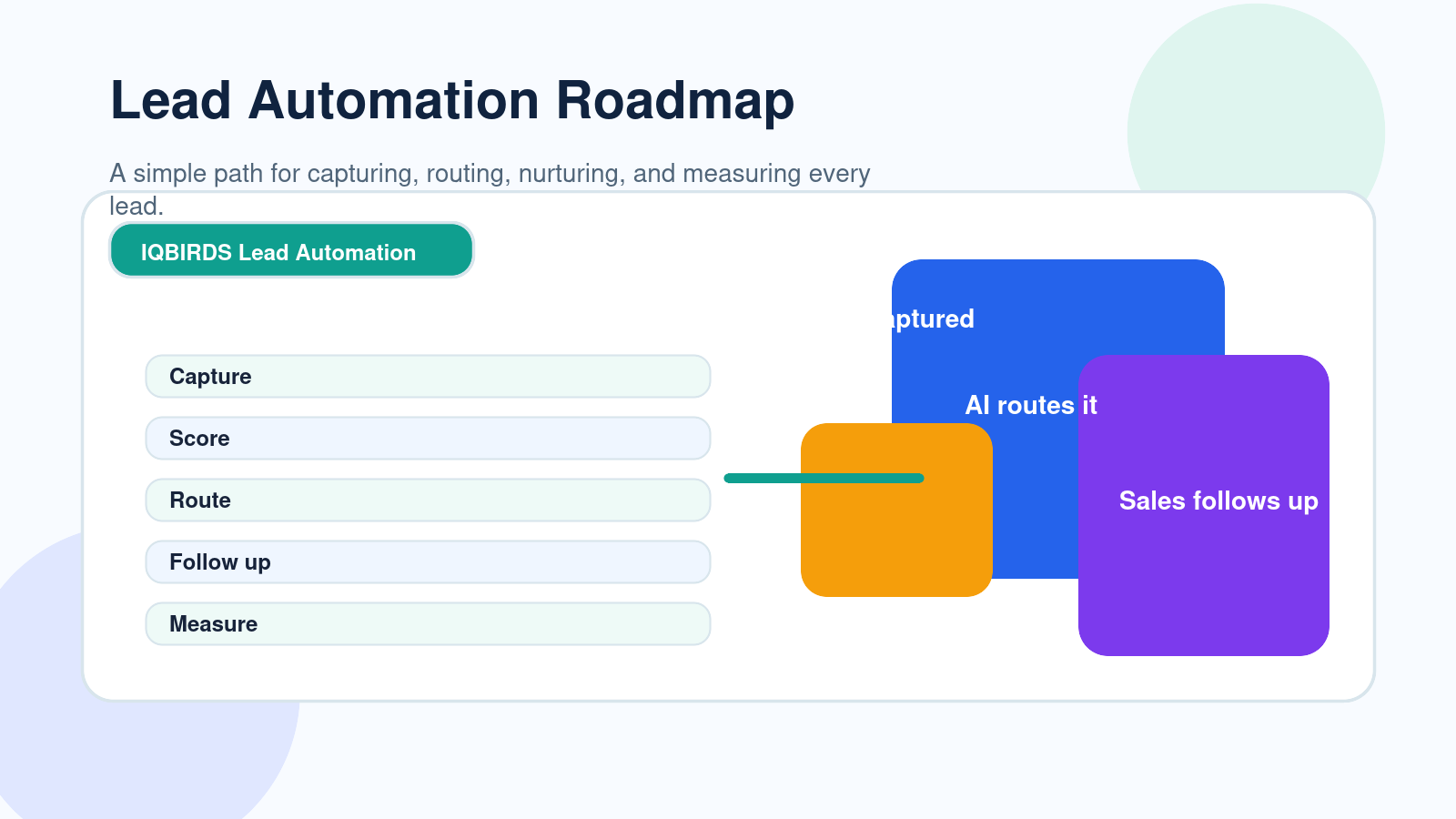
The biggest benefit is control. AI lead automation gives the business a repeatable system instead of relying on memory, inbox checks, and manual updates.
Common Mistakes to Avoid
Automating without fixing the process
If the lead process is unclear, automation will not solve it.
First define the lead stages, owner rules, follow-up timing, and required CRM fields. Then automate the process.
Sending robotic emails to every lead
Automation should not make your business feel cold.
Use AI to draft and personalize messages, but keep human review for high-value, complex, or sensitive leads.
Ignoring lead source data
If you do not track where leads come from, you cannot know which channels are working.
Capture source, campaign, landing page, and form details whenever possible.
Using too many disconnected tools
A form tool, spreadsheet, CRM, email platform, and calendar can work together only if they are connected properly.
Disconnected tools create manual work and make lead tracking harder.
Not measuring follow-up quality
Do not only measure how many leads arrived.
Measure how fast your team responded, how many follow-ups were completed, how many calls were booked, and how many leads became qualified opportunities.
How IQBIRDS Helps Your Business
IQBIRDS helps businesses find and fix the places where leads are being wasted.
The process starts by mapping your lead journey from first contact to follow-up, CRM update, sales handoff, nurturing, and reporting.
Then IQBIRDS can help build AI lead automation workflows that connect your forms, CRM, email, Google Sheets, calendars, chat tools, and reporting systems.
This can include lead capture automation, AI lead scoring, automated lead routing, CRM updates, follow-up reminders, email draft workflows, nurture sequences, pipeline reporting, and human approval steps.
The goal is not to replace your sales team. The goal is to make sure your team never loses a good lead because of slow response, manual admin, or a broken workflow.
FAQs
What is AI lead automation?
AI lead automation uses artificial intelligence and workflow automation to capture, qualify, route, follow up with, and track leads across tools such as forms, CRM systems, email platforms, calendars, and spreadsheets.
How do businesses waste leads without automation?
Businesses waste leads through slow response times, missed follow-ups, duplicate records, poor lead routing, weak nurturing, incomplete CRM data, and no clear visibility into the sales pipeline.
Can AI lead automation improve conversion rates?
AI lead automation can support better conversion by helping teams respond faster, prioritize stronger leads, send timely follow-ups, and keep the CRM more accurate. The final result still depends on the offer, sales process, and customer experience.
Is AI lead automation only for large businesses?
No. Small businesses can benefit from AI lead automation because it helps smaller teams manage leads consistently without hiring more admin staff or manually checking every system.
What tools can be connected in an AI lead automation workflow?
Common tools include website forms, landing pages, CRM platforms, email marketing systems, Google Sheets, calendars, chatbots, call tracking tools, project management apps, and reporting dashboards.
Should AI send follow-up emails automatically?
AI can draft and trigger follow-ups, but businesses should use approval rules for sensitive, high-value, or complex leads. A human review step keeps communication safer and more personal.
How can IQBIRDS help my business?
IQBIRDS can help your business map the lead journey, identify where leads are being wasted, connect your tools, build AI lead automation workflows, and create a system for faster response and cleaner follow-up.
Conclusion
Businesses work hard to generate leads, but many of those leads are wasted after they arrive.
The problem is usually not the lead source. It is the manual process after capture. Slow response, missed follow-ups, weak routing, messy CRM data, and poor nurturing quietly reduce sales opportunities.
AI lead automation helps fix those gaps by creating a faster, cleaner, and more reliable lead management system.
The best approach is simple. Capture every lead. Route it correctly. Follow up quickly. Keep the CRM clean. Measure what happens next. Let AI handle the repetitive work while your team focuses on real sales conversations.
Ready to Stop Wasting Leads?
If your business wants to respond faster, follow up better, and turn more inquiries into real opportunities, IQBIRDS can help. Contact IQBIRDS for a free consultation and build an AI lead automation system that keeps your pipeline moving.
Need AI Automation?
Discover how IQBirds helps businesses automate workflows and build custom digital products.