
AI Automation
AI Lead Scoring Explained for Growing Businesses
Growing businesses often have the same lead problem. More people visit the website, fill out forms, reply to emails, and ask questions. At first, that feels exciting. However, the sales team soon has to decide which leads deserve fast attention and which ones need more nurturing.
AI lead scoring helps solve that problem. It ranks leads based on fit, interest, behavior, and timing. As a result, your team can focus on the people who are more likely to become real customers.
The idea is simple. Not every lead has the same value. Some visitors are only learning. Some are comparing options. Others are ready to speak with your team. With a clear scoring system, your business can tell the difference sooner.
What Is AI Lead Scoring?
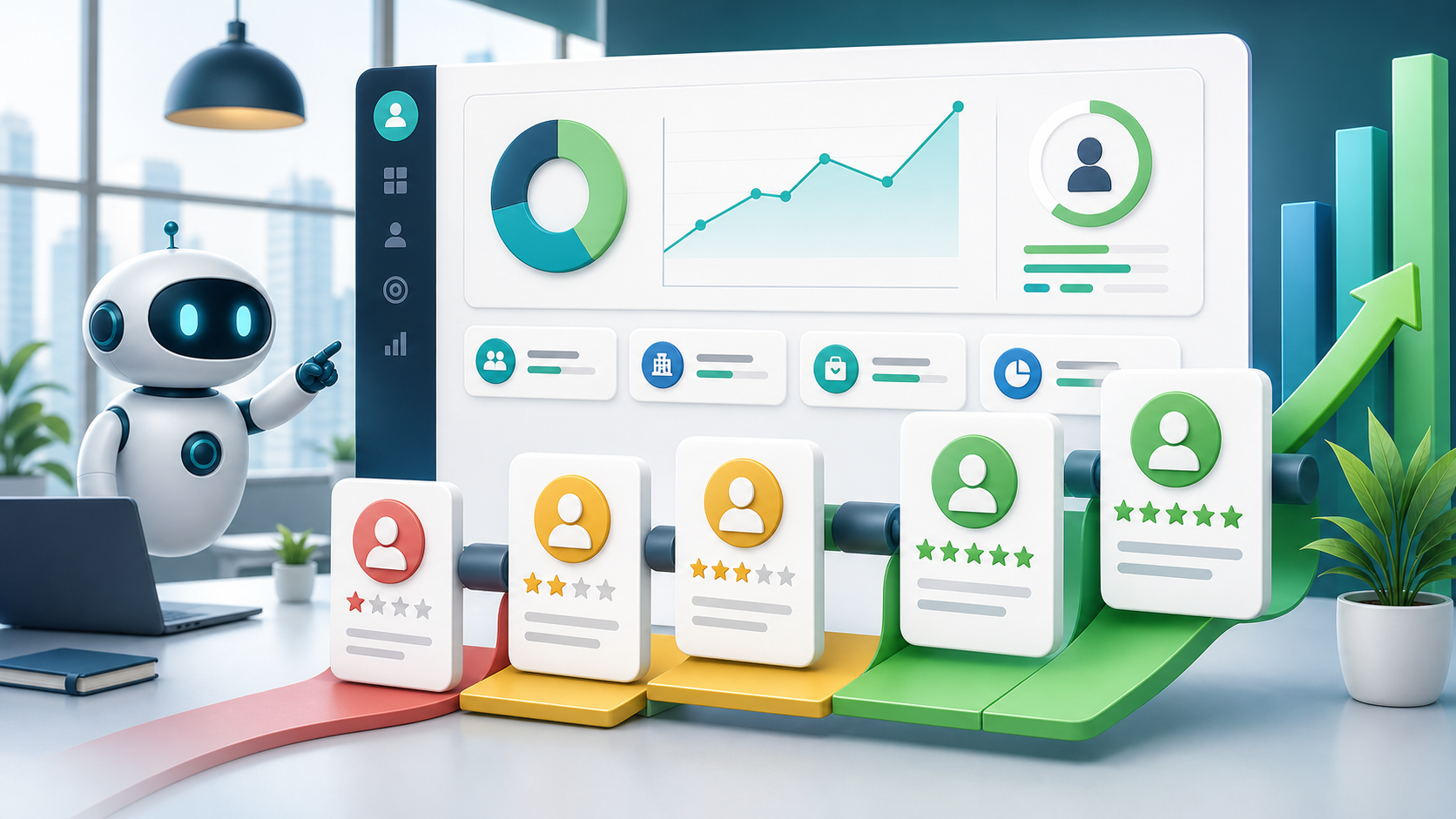
AI lead scoring is a way to rank potential customers with the help of artificial intelligence. The score shows how likely a lead is to fit your business and move forward in the sales process.
For example, a lead may get points for visiting an important service page, opening emails, asking a serious question, or matching your ideal customer profile. At the same time, the system may lower the score if the person is outside your service area, uses a personal email for a business request, or has no clear buying intent.
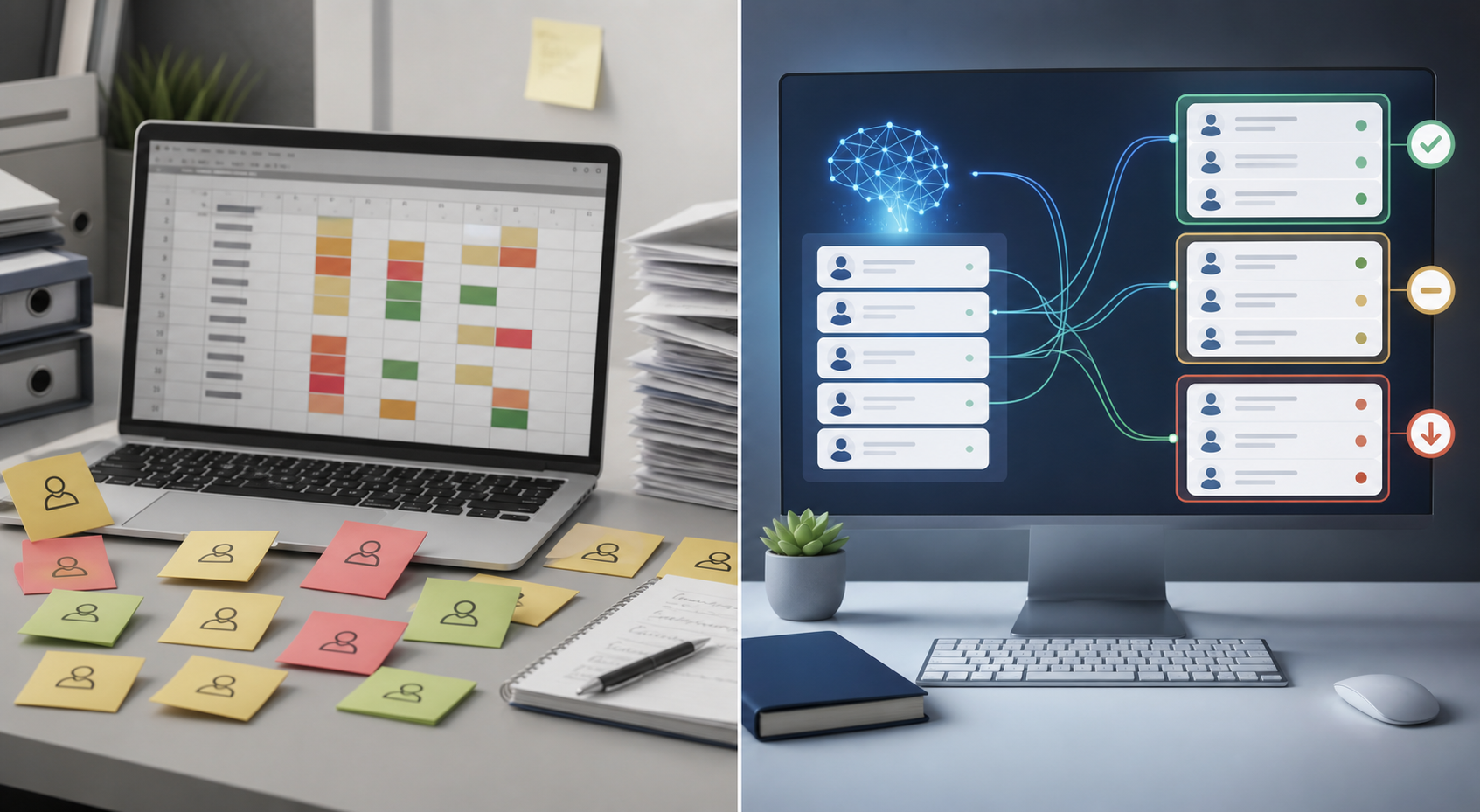
In a manual system, a team member often reviews this information by hand. In an AI system, the software studies the signals and updates the score faster. Therefore, your team gets a clearer view of lead quality without sorting every inquiry one by one.
Why Growing Businesses Need Better Lead Scoring
When a business is small, a team can often review every lead manually. That changes as traffic grows. More forms, chats, calls, and email replies can quickly become hard to manage.
Without a scoring system, sales teams may chase weak leads while strong leads wait too long. Also, marketing teams may not know which campaigns bring quality leads. This creates wasted time, slow follow-up, and unclear reporting.
AI lead scoring gives both teams a shared view of quality. Sales can see who needs attention now. Marketing can see which channels produce better leads. In addition, managers can review the pipeline with more confidence.
How AI Lead Scoring Works
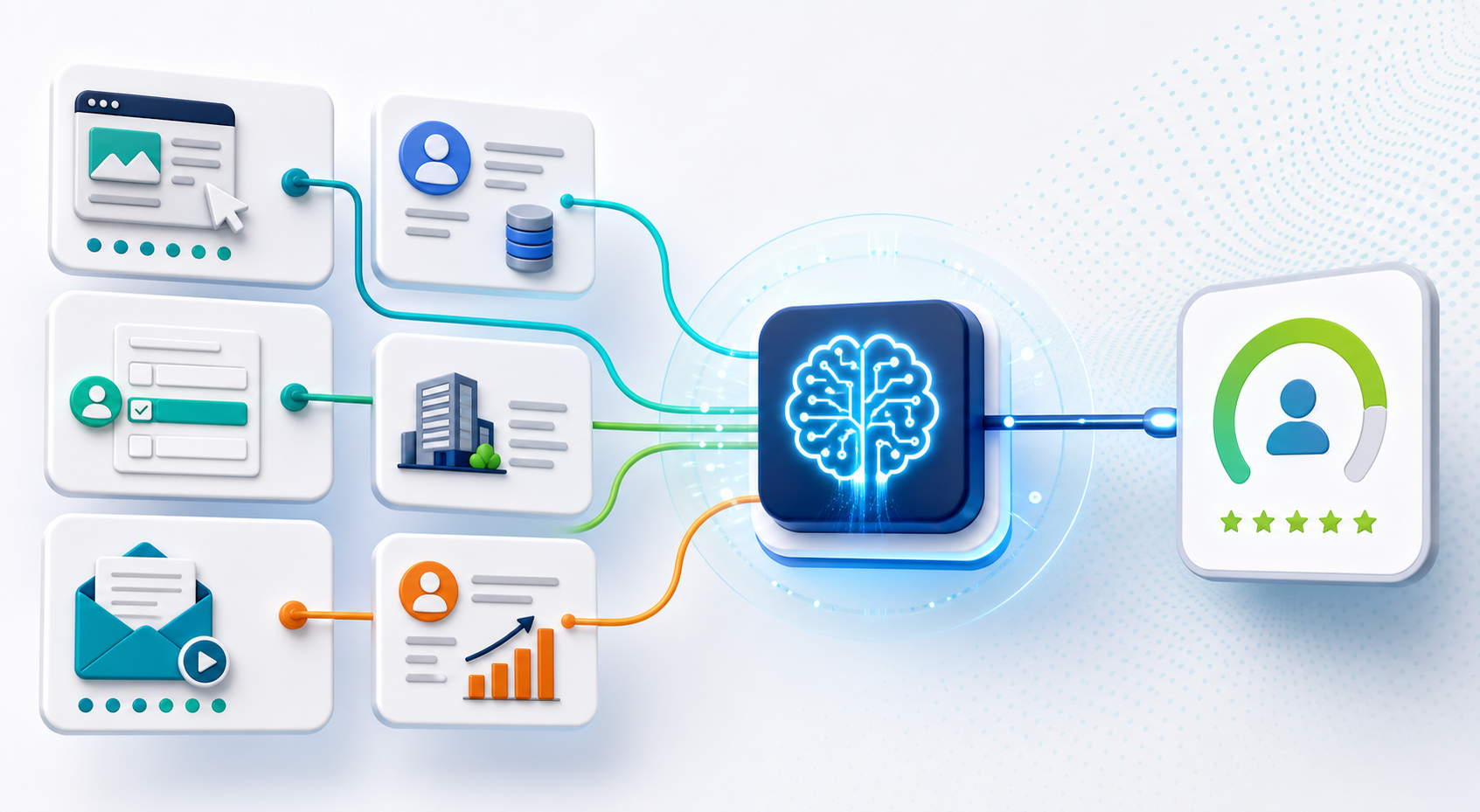
AI lead scoring works by reading useful data from your website, CRM, forms, ads, email tools, and sales activity. Then it looks for patterns that match good opportunities.
First, the system checks fit. This may include industry, company size, job role, location, budget range, or service need. Next, it checks intent. This may include visits to pricing pages, repeat visits, form details, chat questions, or content downloads.
After that, the system can compare new leads with past leads. If earlier customers had similar actions and profiles, the new lead may receive a higher score. However, if a lead looks active but does not match your business, the score can stay lower.
This is why AI lead scoring is useful. It does not only ask, “Did this person fill out a form?” Instead, it asks, “Does this lead look like the kind of customer we can help?”
Practical Examples of AI Lead Scoring
Imagine two people fill out the same contact form. The first person visits one blog post and asks a broad question. The second person views your service page, returns the next day, checks pricing details, and asks about setup time. Both are leads, but they should not receive the same priority.
For a local service business, AI may score leads higher when they come from the right city, choose an urgent service, and request a call. For a B2B company, the score may rise when the lead works at a target company size and visits pages about integration, pricing, or case studies.
In ecommerce, scoring can also help. A visitor who checks several product pages, starts checkout, and returns after an email may be more valuable than a first-time visitor who leaves in seconds. Therefore, the follow-up can be more timely and more useful.
Manual Lead Scoring vs AI Lead Scoring
| Feature | Manual Lead Scoring | AI Lead Scoring |
|---|---|---|
| Speed | Depends on staff review and available time | Scores leads quickly as data arrives |
| Data used | Often uses basic form fields and notes | Uses fit, behavior, CRM history, and intent signals |
| Consistency | Can change from person to person | Follows a clearer scoring model across leads |
| Follow-up | May be slow or based on guesswork | Can trigger the right workflow based on score |
| Reporting | Harder to see why leads are ranked | Makes lead quality easier to review and improve |
| Growth | Gets harder as lead volume increases | Scales better as traffic and inquiries grow |
This table shows the main value of AI lead scoring. Manual scoring can work when lead volume is low. However, it becomes harder to keep fair and fast as the business grows. AI scoring helps your team keep a steady process, even when more leads enter the pipeline.
Where AI Lead Scoring Fits in Your Sales System
AI lead scoring works best when it connects with the tools your team already uses. For many businesses, that means the website, CRM, email platform, forms, chat, and sales dashboard.
If you are building this foundation, IQBIRDS can help through AI Automation Services, AI CRM Development, AI Marketing Automation, and AI Integration Services. These services help connect the data, rules, and workflows behind a better lead process.
You can also build on related IQBIRDS guides, such as how to automate lead capture from website forms to CRM using AI, how AI CRM automation improves sales follow-up and reporting, and CRM automation vs manual lead management.
For outside reading, HubSpot explains lead scoring as a way to rank contacts by fit and activity. Salesforce also shows how AI can support sales teams with better insights. Microsoft documents predictive lead scoring in Dynamics 365, while Google Analytics explains key events that help teams measure important visitor actions.
Helpful references include HubSpot lead scoring, Salesforce AI for sales, Microsoft predictive lead scoring, and Google Analytics key events.
What Makes a Lead Score Useful?
A useful lead score should be easy to understand. If the sales team sees a high score, they should know why that lead matters. For example, the reason may be a strong company fit, a pricing page visit, a clear service need, or a recent request for help.
Also, the score should lead to a clear action. A high score may create a sales task. A medium score may start a helpful email sequence. For low-score leads, the CRM can keep them for later review. This keeps the workflow simple for the team.
Most importantly, the score should improve over time. At first, your business may use simple rules. Later, the system can learn from booked calls, won deals, lost deals, and sales feedback. Because of that, AI lead scoring becomes more helpful as your data gets cleaner.
Step-by-Step Guide to Building AI Lead Scoring
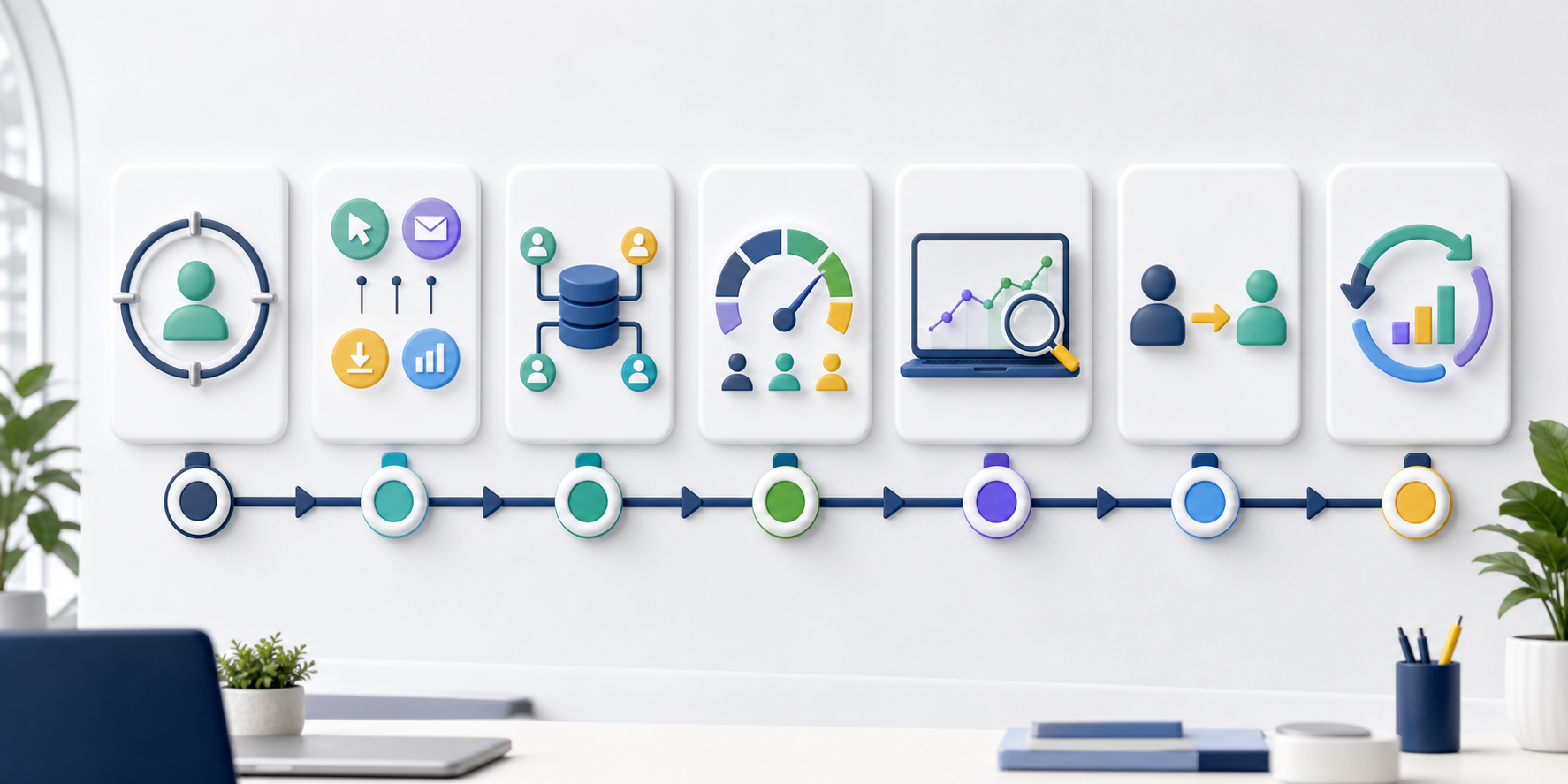
1. Define your ideal customer
Start with a simple profile of your best customer. Include the business type, location, company size, budget, need, and buying role. This gives the score a clear base.
2. Choose the strongest buying signals
Next, list actions that show real interest. These may include pricing visits, service page views, return visits, demo requests, chat questions, or detailed form answers.
3. Connect your CRM and website data
After that, connect forms, chat, analytics, email, and CRM records. A lead score is stronger when the system can see the full journey instead of one isolated action.
4. Create clear score ranges
Set simple ranges for low, medium, and high-priority leads. For example, a high score may trigger a sales alert, while a medium score may start a nurture email flow.
5. Add human review
Even with AI, people should review important leads. This is especially useful for large deals, unusual requests, and scores that do not match the message.
6. Test with real examples
Then, compare scores with actual sales results. If weak leads receive high scores, adjust the rules. If strong leads are missed, add better signals.
7. Measure and improve often
Finally, review booked calls, sales opportunities, close rates, and response time. Over time, this helps the scoring model become more useful and more accurate.
Key Benefits of AI Lead Scoring
- Faster follow-up for high-priority leads
- Better focus for sales teams
- Cleaner CRM records with more context
- Less time wasted on poor-fit inquiries
- More useful lead nurturing for medium-score leads
- Clearer reporting for marketing campaigns
- Stronger sales and marketing alignment
- Better customer experience from the first response
Common Mistakes to Avoid
Scoring every action the same way
A pricing page visit usually matters more than a short blog visit. Therefore, give stronger actions more weight.
Using poor CRM data
Bad data leads to weak scores. Before using AI lead scoring, clean duplicate contacts, missing fields, and old records.
Ignoring sales feedback
Sales teams know which leads are useful in real conversations. So, their feedback should help improve the scoring model.
Sending every high score straight to sales
A high score is helpful, but it is not perfect. Add review rules for large deals or unclear requests.
Forgetting to update the model
Your market changes. Your offer may also change. Because of that, review the score rules often.
How IQBIRDS Helps Your Business
IQBIRDS helps growing businesses build practical AI lead scoring systems that fit the real sales process. First, we map your lead journey. Then, we identify the data your team already has and the signals your team still needs.
Next, IQBIRDS can connect your website, CRM, forms, chat tools, email platform, and reporting dashboard. We can also create lead score ranges, routing rules, human approval steps, and follow-up workflows. As a result, your team gets a system that is easier to use and easier to improve.
The goal is not to make sales more complicated. Instead, the goal is to help your team know which leads need attention, which ones need nurturing, and which ones are not a good fit yet.
FAQs
What is AI lead scoring?
AI lead scoring uses artificial intelligence to rank leads based on fit, interest, behavior, and timing. It helps sales teams see which leads are more likely to become customers.
How is AI lead scoring different from manual scoring?
Manual scoring often depends on basic rules and staff review. AI lead scoring can use more data, update faster, and find patterns from past customer behavior.
What data does AI lead scoring use?
It can use website visits, form answers, chat questions, email activity, CRM records, company details, job role, location, and sales history.
Can small businesses use AI lead scoring?
Yes. Small businesses can start with simple score ranges and basic CRM data. Later, they can add more signals as lead volume grows.
Does AI lead scoring replace salespeople?
No. It helps salespeople focus. Your team still handles real conversations, trust, discovery, and closing.
How often should lead scores be reviewed?
Review scores at least monthly at first. Also, check them after major changes in your offer, market, website, or sales process.
How can IQBIRDS help my business?
IQBIRDS can map your lead journey, connect your tools, build AI scoring rules, add CRM automation, create follow-up workflows, and design reporting dashboards for better lead decisions.
Conclusion
AI lead scoring gives growing businesses a better way to rank and manage leads. It helps your team see which prospects are ready for sales, which ones need nurturing, and which ones are not a strong fit.
However, the best results come from a clear process. Define your ideal customer, choose the right signals, connect your CRM, add human review, and improve the model with real results.
If your business is getting more leads but struggling to know which ones matter most, IQBIRDS can help you build an AI lead scoring workflow that supports faster follow-up and smarter sales decisions.
Need AI Automation?
Discover how IQBirds helps businesses automate workflows and build custom digital products.