
AI Automation
AI Sales Assistants vs Traditional Sales Teams
Sales teams are built on people. A good rep knows how to listen, ask the right question, build trust, handle objections, and guide a buyer toward a clear decision. However, the modern sales process also includes a lot of work that is not really selling: updating CRM fields, writing follow-up notes, researching prospects, checking reminders, preparing call summaries, and tracking pipeline movement.
AI sales assistants are designed to support that repetitive work. They help sales teams respond faster, stay organized, and keep CRM data cleaner. Instead of replacing traditional sales teams, the best AI sales assistants give human reps more time for conversations that actually move deals forward.
For growing businesses, the real question is not whether AI or people are better. The better question is where each one fits. Sales still needs human judgment, but AI can make the process around that judgment much smoother.

What AI Sales Assistants Actually Do
An AI sales assistant is a tool or workflow that supports sales tasks using artificial intelligence. It can summarize calls, draft follow-up emails, enrich lead records, suggest next steps, score leads, create tasks, prepare meeting notes, and update CRM data.
In practice, an AI sales assistant works like a support layer around the sales rep. It watches the sales process, notices missing steps, prepares helpful information, and reduces manual admin work. As a result, reps can spend less time managing the system and more time speaking with prospects.
For example, after a discovery call, AI can summarize the conversation, identify objections, draft a follow-up email, and create a reminder for the next touchpoint. Then the sales rep can review the output, personalize it, and send it with confidence.
Where Traditional Sales Teams Still Win
Traditional sales teams still matter because buyers are human. People want to feel understood, especially when the purchase is expensive, complex, or important to their business. A sales rep can read tone, adjust the conversation, build trust, and handle sensitive objections with care.
AI can help prepare the conversation, but it should not own every conversation. A rep still needs to understand the buyer’s goals, timing, concerns, budget, and decision process. In addition, the rep must know when to slow down, when to challenge an assumption, and when to bring in another expert.
Therefore, the strongest sales teams do not treat AI as a replacement for people. They treat AI as support for work that slows people down.
Practical Ways AI Sales Assistants Support Sales Teams
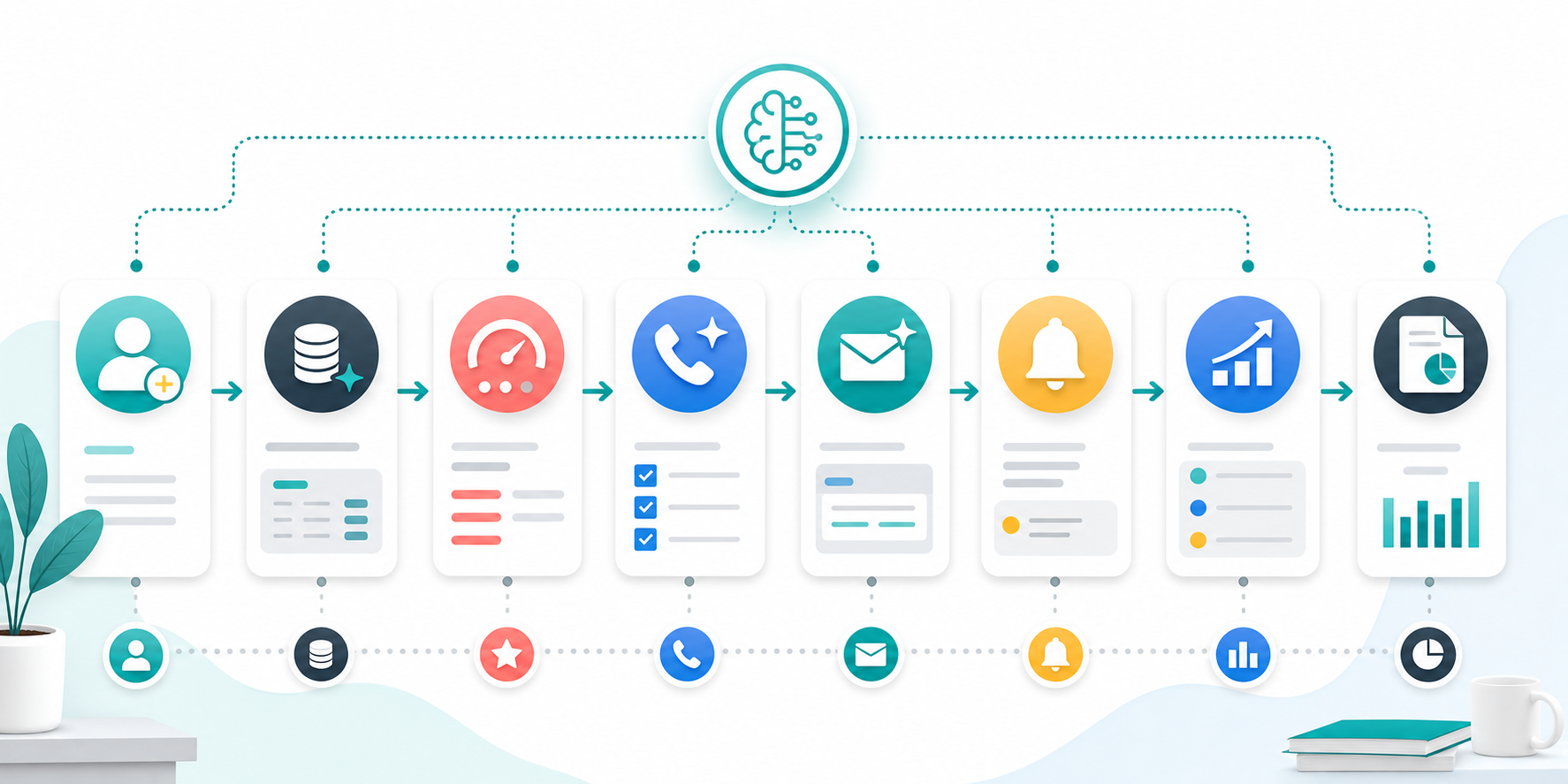
Lead research and enrichment
First, AI can help gather useful context about a lead before a sales conversation. It can organize company details, previous interactions, form submissions, CRM notes, and service interest. This helps reps start with a clearer picture.
Lead scoring and prioritization
Next, AI can score leads based on fit, behavior, urgency, and engagement. As a result, sales teams can focus first on prospects who are more likely to need help now.
Call preparation and summaries
Before a call, AI can prepare notes from the CRM and suggest questions. After the call, it can summarize pain points, next steps, objections, and promised follow-ups. Meanwhile, the rep can focus on listening instead of typing every detail.
Follow-up email drafts
AI can draft personalized follow-up emails based on the conversation and lead stage. However, the rep should still review the message for tone, accuracy, and relationship context before sending.
CRM updates and task reminders
Many sales teams struggle with CRM hygiene. AI sales assistants can update fields, create tasks, log notes, and remind reps when follow-up is due. In addition, managers get cleaner pipeline visibility.
Pipeline reporting
Finally, AI can help summarize pipeline movement, stalled deals, missed follow-ups, and upcoming opportunities. This gives managers better insight without asking reps to prepare every update manually.
AI Sales Assistants vs Traditional Sales Teams
| Area | Traditional Sales Teams | AI Sales Assistants |
|---|---|---|
| Relationship building | Strong at trust, empathy, negotiation, and judgment | Supports with context, summaries, and reminders |
| Lead research | Manual and often skipped when reps are busy | Can gather and organize lead context faster |
| Follow-up | Depends on rep discipline and available time | Can draft messages and trigger reminders automatically |
| CRM updates | Often delayed, incomplete, or inconsistent | Can update records, tasks, and notes more consistently |
| Scalability | Requires more hiring as lead volume grows | Helps current reps handle more work with less admin time |
| Decision-making | Best for complex judgment and human nuance | Best for patterns, suggestions, and workflow support |
This comparison shows why the best answer is not “AI or sales reps.” In short, traditional sales teams are better at trust and judgment, while AI sales assistants are better at speed, consistency, and organization. Together, they can create a stronger sales process.

How AI Fits Into Your Sales Stack
AI sales assistants work best when they connect to the systems your team already uses. These may include CRM, email, calendar, call tools, forms, chat, task management, and reporting dashboards. Therefore, the goal is not another disconnected app. The goal is a connected workflow.
IQBIRDS helps businesses connect these systems through AI Automation Services, AI CRM Development, and AI Integration Services. These services are useful when sales teams have leads, conversations, and follow-ups spread across too many tools.
For more context, read IQBIRDS guides on AI workflows every sales team should automate, why fast lead response beats bigger marketing budgets, and AI CRM automation for sales follow-up and reporting. External resources from Microsoft Copilot for Sales, Salesforce sales automation, HubSpot on AI sales assistants, and IBM intelligent automation also show how AI can support sales workflows when it is connected to real processes.
When to Use AI and When to Use a Human Rep
A simple rule helps teams avoid confusion: use AI for preparation, organization, reminders, summaries, and first drafts. Use people for judgment, trust, negotiation, emotional nuance, and final decisions. This keeps the workflow efficient without making buyers feel like they are being pushed through a machine.
For example, AI can prepare a call brief before a demo. It can summarize the buyer’s company, previous messages, service interest, and likely objections. However, the rep should still decide how to open the conversation, which question to ask first, and how to respond when the buyer shares something unexpected.
In addition, AI can draft follow-up after the call, but the rep should personalize the message. A buyer may have mentioned a concern, timeline, internal stakeholder, or budget limit that needs a thoughtful human response. Therefore, the best sales teams use AI to save time while protecting the relationship. This balance also makes adoption easier because reps can see AI as support for their work, not a threat to their role.
Step-by-Step Guide to Adopt AI Sales Assistants
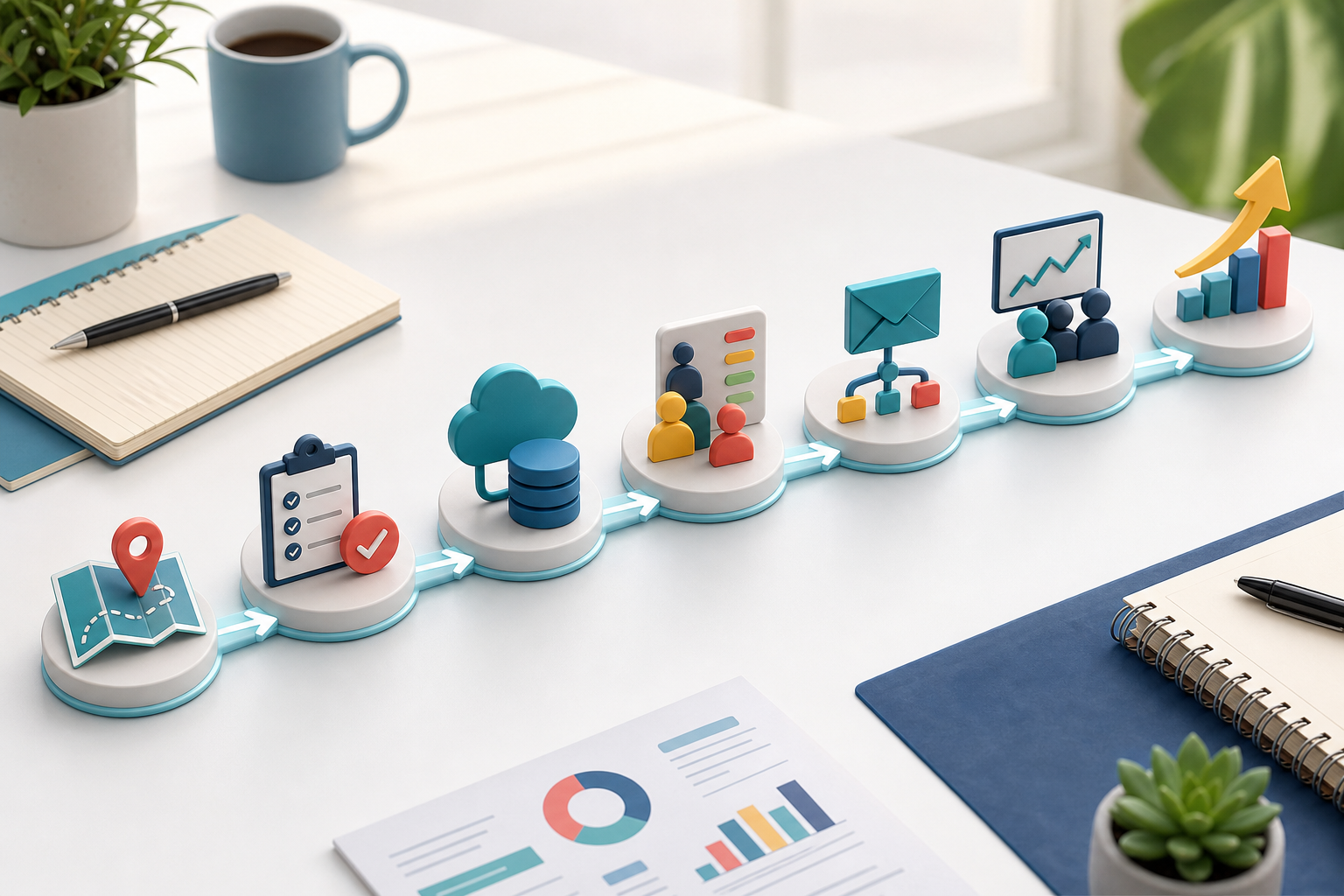
1. Map the sales process
First, document how leads move from inquiry to qualification, discovery call, proposal, follow-up, close, and handoff. Include every tool, owner, trigger, and delay.
2. Identify repeated admin work
Next, list the tasks reps repeat every day. Look for CRM updates, call notes, lead research, follow-up emails, reminders, meeting prep, and pipeline updates.
3. Choose one sales workflow first
After that, choose one workflow with clear value. Lead scoring, call summaries, follow-up emails, or CRM updates are good starting points because they are common and easy to review.
4. Connect the CRM and communication tools
Then connect the AI assistant to the CRM, email, calendar, call notes, and task system. Without these connections, the assistant may create more copying instead of less.
5. Add human review rules
Because sales messages affect trust, people should review important communication. Keep human approval for pricing, objections, proposals, sensitive details, and high-value opportunities.
6. Train reps on the workflow
In addition, train the team on when to use the assistant, how to review drafts, how to correct CRM data, and how to give feedback when AI output is not useful.
7. Measure pipeline impact
Finally, measure response time, follow-up completion, CRM accuracy, booked calls, qualified opportunities, stalled deals, and revenue per rep. Use the data to improve the workflow over time.
Key Benefits of AI Sales Assistants
- Faster lead response and better prioritization
- Cleaner CRM records and fewer missed updates
- Less manual admin work for sales reps
- More consistent follow-up after calls and demos
- Better preparation for sales conversations
- Stronger pipeline visibility for managers
- More time for relationship-building and closing
- Scalable support without immediately hiring more staff
Most importantly, AI sales assistants help sales teams protect time. When reps spend less time chasing notes and tasks, they have more time to understand buyers and move good opportunities forward.
Common Mistakes to Avoid
Expecting AI to close deals alone
AI can support sales, but it should not replace human conversations where trust, price, risk, and objections matter. Use AI to prepare and organize, not to remove judgment.
Automating messy CRM data
If CRM fields are unclear, AI will struggle to route, score, and summarize accurately. Therefore, clean up required fields, lead stages, tags, and naming rules before scaling.
Sending unreviewed AI messages
Generic or inaccurate messages can hurt credibility. Sales reps should review AI drafts and adjust them based on the actual relationship and conversation.
Measuring activity instead of outcomes
Do not judge AI only by the number of emails drafted or tasks created. Measure whether it improves response time, follow-up quality, pipeline movement, and closed revenue.
How IQBIRDS Helps Your Business
IQBIRDS helps businesses design AI sales assistant workflows around real sales processes. The work often starts with mapping how leads enter the business, how reps follow up, how CRM data is updated, and where deals slow down.
From there, IQBIRDS can help with workflow mapping, CRM automation, AI automation, tool integration, lead management, customer journey automation, human approval workflows, and reporting dashboards. The goal is to help sales teams respond faster and sell with better context.
If your team is spending too much time on CRM updates, missed follow-ups, or manual reporting, AI sales assistants can be a practical way to improve capacity without weakening the human side of sales.
Frequently Asked Questions
What are AI sales assistants?
AI sales assistants are tools or workflows that help sales teams with lead research, scoring, CRM updates, call summaries, follow-up drafts, reminders, and pipeline reporting.
Do AI sales assistants replace traditional sales teams?
No. AI sales assistants support sales teams by reducing repetitive work. Human reps still handle trust, strategy, negotiation, relationship-building, and final decisions.
What sales tasks should AI assistants handle first?
Start with lead scoring, CRM updates, call summaries, meeting preparation, follow-up email drafts, reminders, and pipeline summaries because these tasks repeat often.
Are AI sales assistants useful for small sales teams?
Yes. Small teams often benefit quickly because AI can reduce admin work and help reps follow up faster without hiring more people immediately.
How do AI sales assistants improve CRM data?
They can log notes, update fields, create tasks, identify missing data, and summarize activity so CRM records stay more complete and useful.
Should reps review AI-generated follow-up emails?
Yes. Reps should review AI drafts for accuracy, tone, pricing details, relationship context, and any promises made during the conversation.
How can IQBIRDS help my business?
IQBIRDS can map your sales process, connect your CRM and communication tools, build AI sales assistant workflows, add human review rules, and create dashboards that show sales performance clearly.
Conclusion
AI sales assistants and traditional sales teams should not be treated as enemies. They are strongest when they work together. Sales reps bring judgment, trust, empathy, and negotiation. AI brings speed, organization, reminders, summaries, and cleaner data.
The best path is to start with one repeated sales workflow, connect the right tools, keep humans in control of important decisions, and measure whether the process improves real sales outcomes.
If your business wants sales reps to spend more time selling and less time managing admin work, contact IQBIRDS. We can help you build AI sales assistant workflows that support your team, improve follow-up, and create better pipeline visibility.
Need AI Automation?
Discover how IQBirds helps businesses automate workflows and build custom digital products.